7 Evaporator Repair Steps for Transport Reefer Units
Last Updated: November 21, 2026
Quick Summary
Evaporator repair on a transport reefer starts with matching the symptom to the likely cause, such as ice that will not clear, water in the box, or weak airflow. Check fans, defrost, and drain lines first, then test pressures and locate leaks before deciding whether to repair or replace the coil.
Check airflow, defrost, and drain lines before opening the refrigerant circuit.
Recover refrigerant rather than venting it, and use a certified technician.
A single accessible leak in a sound coil is usually repairable.
Verify the fix with a full pull-down and monitor through a defrost cycle under load.
Clear any ice before a long run to avoid damaging the coil and fans.
Is your reefer evaporator failing?
Platinum offers 24/7 mobile evaporator repair across the Tri-Cities, Washington, and Oregon.
Table of Contents
If a reefer trailer is running warm, the evaporator is often the first place to look. Transport refrigeration evaporator repair is a routine but precise job, and catching a fault early keeps a load from spoiling. Mobile transport refrigeration evaporator repair can get diagnosis and repair to fleets where the trailer is parked.
The evaporator sits inside the cargo box and pulls heat out of the air, so it works hardest when a unit is pulling down temperature. When it fails, the cargo often shows the problem before the gauges do. Warm spots, ice build-up, and a unit that runs constantly without reaching setpoint are the usual signs.
Evaporator Symptoms That Point to a Fault in Your Reefer
Common evaporator symptoms include ice on the coil, water pooling on the floor, weak airflow at the discharge, and temperature swings between setpoint and return air. Ice that will not clear during a defrost cycle usually points to a defrost or heater fault. Water inside the box often means a blocked drain line.
Check these signs before assuming the compressor is at fault. Many complaints that start as "the unit is not cooling" trace back to the evaporator side. Note when the symptom appears, whether it is loaded or empty, and whether it happens during defrost.
Transport Refrigeration Evaporator Repair Cost: What Drives the Price
Evaporator repair cost is driven by four variables: the failed component, the accessibility of the coil, the refrigerant work required, and whether the unit can be repaired on site or must be moved. A cleared drain line or a replaced fan motor is a minor repair; a leaking coil that requires recovery, evacuation, and recharge is a major one.
Component-level drivers break down this way.
Accessibility matters as much as the part. A unit mounted where the technician can reach the evaporator without removing cargo or panels takes less labor than one boxed in by a loaded trailer. Pricing depends on parts and labor. We do not publish fixed prices because each unit and each failure is different. Carrier reefer repair is also offered mobile across the region, so you can see the brand-specific service for your unit. Contact Platinum Transport Refrigeration Services at (509) 547-5262 for a quote based on your unit and the repair required.
When the estimate approaches the cost of a replacement coil or a rebuilt unit, weigh coil condition, leak location, corrosion, parts availability, downtime, and remaining unit life before authorizing the repair. A coil that is corroded across multiple circuits is usually a replacement candidate; a single pinhole leak in an otherwise sound coil is usually a repair.
Step-by-Step Evaporator Diagnosis and Repair
A methodical sequence saves time and prevents replacing parts that were never faulty. The goal is to separate an evaporator fault from a compressor, expansion valve, defrost control, or airflow problem before opening the refrigerant circuit. Work in this order: airflow and defrost first, drainage second, pressure and leak testing third, repair fourth, and verification last.

Step 1: Confirm the Symptom Pattern
Match the complaint to the likely cause before touching the unit. Ice on the coil that will not clear during defrost points to a defrost timer, termination control, or heater fault rather than a refrigerant problem. Water pooling in the box points to a blocked drain line or a drain pan that is not pitched correctly. Weak airflow at the discharge with a coil that is cold but not iced points to fan motors, blades, or an airflow restriction. Warm cargo with a unit that runs constantly and never reaches setpoint points to refrigerant loss, a restricted expansion valve, or a coil that is fouled on the air side. Unusual noises at the evaporator usually trace to fan bearings, a loose blade, or ice contacting the fan. Note whether the symptom appears loaded or empty and whether it happens during or after defrost; that timing often separates a defrost fault from a charge fault.
Step 2: Check Airflow, Defrost, and Drain Lines
Begin with the fans. Confirm each evaporator fan turns freely, draws air across the coil, and is not obstructed by ice or debris. Then review the defrost cycle, watching for the heaters to engage and the coil to clear. A blocked drain line sends water back into the box, so clear it and confirm water exits the unit during defrost. Watch out: running a unit with a fully iced evaporator can damage the coil and fans, so clear the ice before a long run.
Step 3: Pressure Testing and Locating Coil Leaks
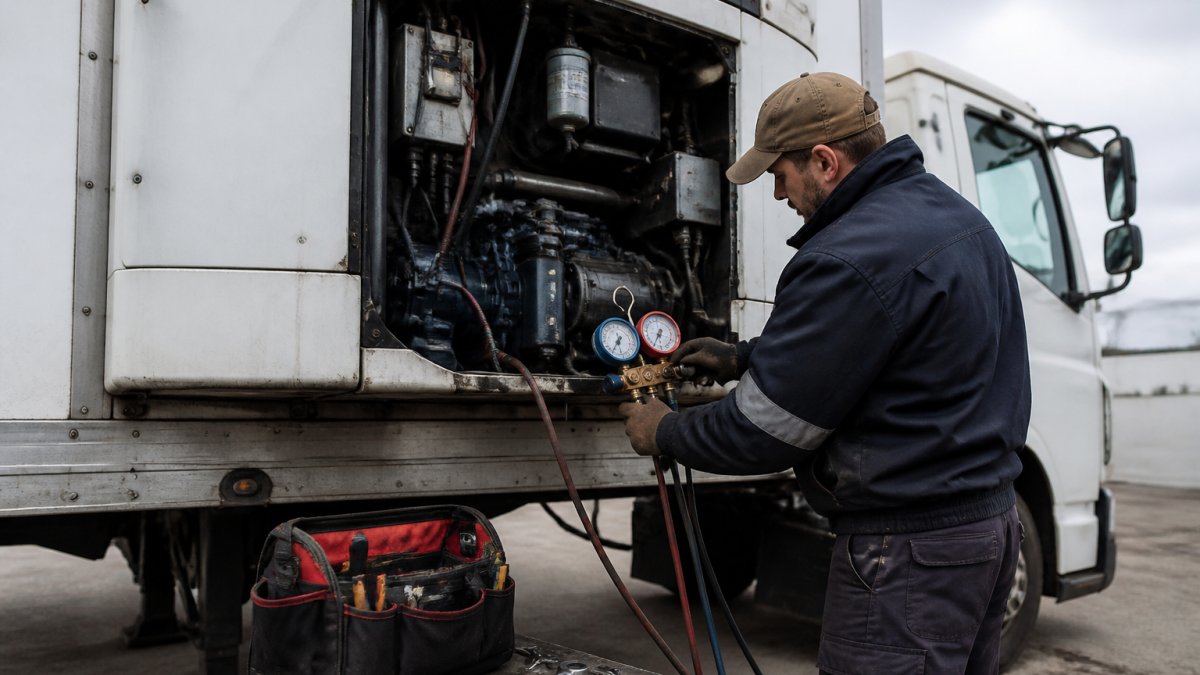
If airflow and defrost are sound but the unit still cannot pull down, check system pressures and look for leaks. A low-side reading that drops quickly, or a system that holds a vacuum poorly, points toward a leak in the evaporator circuit. Locate leaks with an approved detection method, then confirm the repair with a pressure test before recharging. Refrigerant must be recovered, not vented, and the work must be done by a technician certified under the federal refrigerant handling rules described in EPA Section 608 refrigerant certification guidance.
Step 4: Repair or Replace the Coil
Decide repair versus replacement on coil condition, leak location, corrosion, parts availability, downtime, and lifecycle cost. A single accessible leak in an otherwise sound coil is usually repairable. A coil that is corroded across multiple circuits, has failed at a tube sheet, or is no longer available as a direct replacement is usually a replacement candidate. If the repair would require a larger replacement than the unit justifies, weigh the cost against the remaining life of the unit before spending on a rebuild.
Step 5: Post-Repair Testing and Verification
After repair, verify the fix rather than assuming it. Leak-test the repaired circuit, evacuate to specification, and charge to the unit manufacturer's specified weight or pressures. Confirm airflow across the coil, confirm the evaporator clears during a full defrost cycle, confirm the drain exits freely, and run a temperature pull-down with the box empty and then under load. Monitor the unit through at least one defrost cycle under load, because a repair that passes a static check can still fail when the coil ices. Record the repair, the refrigerant added, and the final readings in the maintenance log.
Preventing Recurring Evaporator Failures
Most repeat evaporator failures trace to a root cause that was never corrected: a drain line that clogs again, a coil that is never cleaned, corrosion in a wet box, vibration loosening fan mounts, or an airflow restriction from damaged panels or overloaded cargo. Set an inspection interval that includes coil cleaning, drain clearing, fan and heater checks, and a defrost cycle observation, and fix the root cause rather than only the failed part.
The sequence below summarises the five repair steps in the order a technician works through them.
Step | What to do | Check or timing |
Confirm the symptom pattern | Match the complaint to the likely cause | Note loaded or empty, and during or after defrost |
Check airflow, defrost, and drain lines | Confirm fans turn freely, review defrost, clear drains | Clear ice before a long run |
Pressure testing and leak location | Check pressures and locate leaks | Recover refrigerant, never vent |
Repair or replace the coil | Decide on coil condition and leak location | Weigh against remaining unit life |
Post-repair testing and verification | Leak-test, evacuate, charge, run pull-down | Monitor through at least one defrost under load |
Transport Refrigeration Evaporator Repair Parts and On-Site Stocking
Keeping common parts on hand shortens repair time. Fan motors, defrost heaters, drain components, and common fittings are the parts most often needed on a mobile call. Platinum Transport Refrigeration Services carries a large variety of parts on-site.
Mobile Reefer Repair Versus Depot Service
Mobile service brings the technician and parts to your trailer, which matters when a load cannot wait. Depot service can suit planned maintenance when a unit has time to spare. For urgent evaporator faults, mobile repair usually keeps the unit in service sooner. Platinum Transport Refrigeration Services provides 100% mobile reefer repair in the Tri-Cities, so check whether your location is covered before you call. See the reefer repair service area to confirm coverage.
When choosing a technician, look for experience with your unit make and a clear process for diagnosing faults. Our guide to choosing a mobile refrigeration mechanic covers what to ask before you book. EPA Section 608 refrigerant certification guidance explains the federal rules that apply to refrigerant handling.
Safety, Refrigerant Handling, and Repair Limits
Refrigerant must be recovered and handled by certified technicians under federal rules (the EPA). Never vent refrigerant, and never work on a live system without isolating power and following lockout procedures. Some repairs, such as coil replacement with a full system evacuation, are better left to a shop with the right equipment.
Know your limits. If a repair would need a larger replacement than the unit justifies, weigh repair against replacement before spending on a rebuild.
Booking Evaporator Repair Near Me: Verifying the Fix and Calling Platinum
After repair, verify the fix by running a full pull-down and confirming the evaporator clears during defrost, drains freely, and holds setpoint under load. Keep a record of the repair for your maintenance log.
When a reefer fails on the road, call Platinum Transport Refrigeration Services at (509) 547-5262. We offer 24-hour emergency reefer repair in the Tri-Cities. Our team carries dealer-level expertise and a large variety of parts on-site, so we can diagnose and repair your evaporator quickly.
Call Platinum Transport Refrigeration Services at (509) 547-5262 for 24/7 mobile evaporator repair and a clear plan for getting your unit back in service.
Frequently Asked Questions
Can a transport refrigeration evaporator be repaired, or does it need replacement?
Many evaporator faults are repairable: a small coil leak can be located, brazed, and pressure tested, and a clogged drain line or a failed defrost heater is usually a straightforward fix. Replacement becomes the better choice when the coil is corroded through in several places, the fin pack is severely damaged, or the repair cost approaches the cost of a replacement coil plus labor. A technician can pressure test the coil and check the remaining component condition to give you a clear repair-versus-replace recommendation before work begins.
How much does transport refrigeration evaporator repair cost?
Pricing depends on the unit make and model, the fault found during diagnosis, whether a coil, fan motor, or sensor needs replacing, and how much refrigerant must be recovered and recharged. Labor time, parts availability, and whether the work is done at your site or at a depot also affect the total. Platinum Transport Refrigeration Services does not publish fixed prices in this article; contact us at (509) 547-5262 or through our website for a quote based on your specific unit.
Can a mobile technician repair a reefer evaporator on-site?
Yes, many evaporator repairs can be completed at the trailer's location, including fan motor replacement, defrost component repair, drain line clearing, and leak repair when the coil is accessible. Some jobs, such as a full coil replacement on certain units, may require more time or equipment than a mobile visit allows.
What are the signs of a failing reefer evaporator?
Watch for warm spots or uneven cooling inside the box, ice buildup on the evaporator coil between defrost cycles, water pooling on the floor, a unit that runs constantly without reaching setpoint, and a noticeable drop in airflow at the discharge. A leaking coil often shows up as oily residue on the fins or a loss of refrigerant charge, while a drain line problem typically shows up as water in the cargo area. Catching these signs early usually means a smaller, cheaper repair.
Comments