Emergency Reefer Repair Cost Factors That Drive Your Bill
Last Updated: November 2, 2026
Quick Summary
Emergency reefer repair cost factors include labor rates and after-hours premiums, diagnostic and trip charges, parts versus labor split, equipment age, and how long the unit sits before a technician arrives. Your reefer repair cost is driven as much by when and where the breakdown happened as by the failed component itself, since downtime and spoilage risk often exceed the repair bill.
Mobile providers may bill portal-to-portal, so travel time adds billable hours before diagnostics begin.
Ask whether the diagnostic fee is folded into the repair if you authorize the work.
Parts markup and availability can swing the total more than labor does on major failures.
Downtime costs stack as lost revenue, idle time, spoilage liability, and rejected loads.
Confirm warranty status and cargo insurance terms before authorizing emergency work.
Table of Contents
What Drives Emergency Reefer Repair Cost Factors
Emergency reefer repair cost factors are the specific variables that determine what you pay when a refrigerated unit fails on the road: labor rates and after-hours premiums, diagnostic and trip charges, parts versus labor split, equipment age, and how long the unit sits before a technician reaches it.
Below, we break down each cost driver so you can read a reefer repair estimate with real confidence. But first, here is what most guides get wrong: they quote a single hourly rate and stop there. Labor is only one line on the invoice.
Labor Rates and After-Hours Premiums
Labor is the first line item most fleet managers look at, and it is also the most misunderstood.
Standard business-hours labor: the baseline rate, charged when a unit is serviced during normal working hours at a fixed location.
After-hours and weekend premiums: a higher rate applied when a technician is dispatched outside normal hours, including late-night and Sunday calls. Pricing for after-hours calls depends on the provider and the call details, so confirm the rate before authorizing work.
Overtime stacking: when a call runs long, additional hourly premiums can apply on top of the base rate. A job that starts at 9 p.m. and runs past midnight can carry two premium tiers at once, which is why the same repair costs more at 2 a.m. than at 2 p.m.
Mobile dispatch and travel time: many providers bill portal-to-portal, meaning the clock starts when the technician leaves the shop, not when the wrench turns. A rural breakdown 90 minutes from the nearest stocked service truck can add two to three billable hours before any diagnostic work begins.
Geography can move the rate as much as the clock does, and mobile providers may price dispatch by distance rather than a flat call fee.
A common mistake is comparing a mobile emergency quote to a depot quote without accounting for the time cost of hauling the trailer in.
Diagnostic Fees and Trip Charges
Diagnostic fees and trip charges are costs you may pay before any repair begins. A diagnostic fee covers the technician's time to identify the fault.
Electrical diagnostics on modern reefer controllers can take real time, and a misdiagnosis is expensive for everyone.
Watch out: some providers may fold the diagnostic fee into the repair if you authorize the work, and some may not. Ask which applies before you approve anything.
Refrigerated Trailer Repair Costs: Parts Versus Labor
Parts can swing the total more than labor does, because reefer components vary in price and availability. Refrigerated trailer repair costs split into two moving pieces: the labor to install a part, and the part itself, which often carries a markup over wholesale. On a major failure, the part can be half the invoice or more, and the markup, not the list price, is where estimates diverge.
How Parts Markup and Availability Drive the Bill
Emergency parts pricing can rise with urgency. A part ordered overnight from a regional warehouse may add freight and a rush charge.
Older units compound the problem. Parts for aging models are often discontinued or stocked in fewer locations, so sourcing takes longer and the premium climbs. A technician who has to make a second trip for a part doubles the trip charge and the labor clock.
The Most Expensive Reefer Failures
The costliest failures tend to be the ones that take the unit out of service longest:
Compressor failure: a major component replacement that can dominate the invoice, both in part cost and in labor hours to evacuate, replace, and recharge the system.
Engine rebuild or overhaul on the reefer power unit: labor-intensive and parts-heavy, with machine-shop turnaround adding to the timeline.
APU systems and electrical faults: diagnostics can run long before a part is even ordered.
Cooling capacity loss from refrigerant leaks: generally cheaper to fix early than after the compressor is damaged.
Equipment age can matter here. Older units may need more parts and labor hours per job, and parts for aging models can take longer to source.
Watch out: ask whether the parts quote is list, wholesale-plus-markup, or a flat emergency rate, and whether the provider carries the part on the truck or has to order it. A quote that looks lower on labor can cost more overall once a second trip or freight charge is added.
How Reefer Downtime Costs Stack Up Against the Repair Bill
Reefer downtime costs can exceed the repair bill itself. A trailer sitting still is not earning, the driver is idle, and the load may be warming.
Downtime costs stack in layers:
Lost revenue from delayed or cancelled deliveries
Driver and equipment idle time while the trailer waits
Cargo spoilage liability if the load warms past safe limits
Penalties and rejected loads from receivers who refuse out-of-spec freight
This is why the cheapest repair is not always the cheapest outcome. A fast, correct fix that returns the trailer to service beats a lower quote that leaves it parked for two extra days.
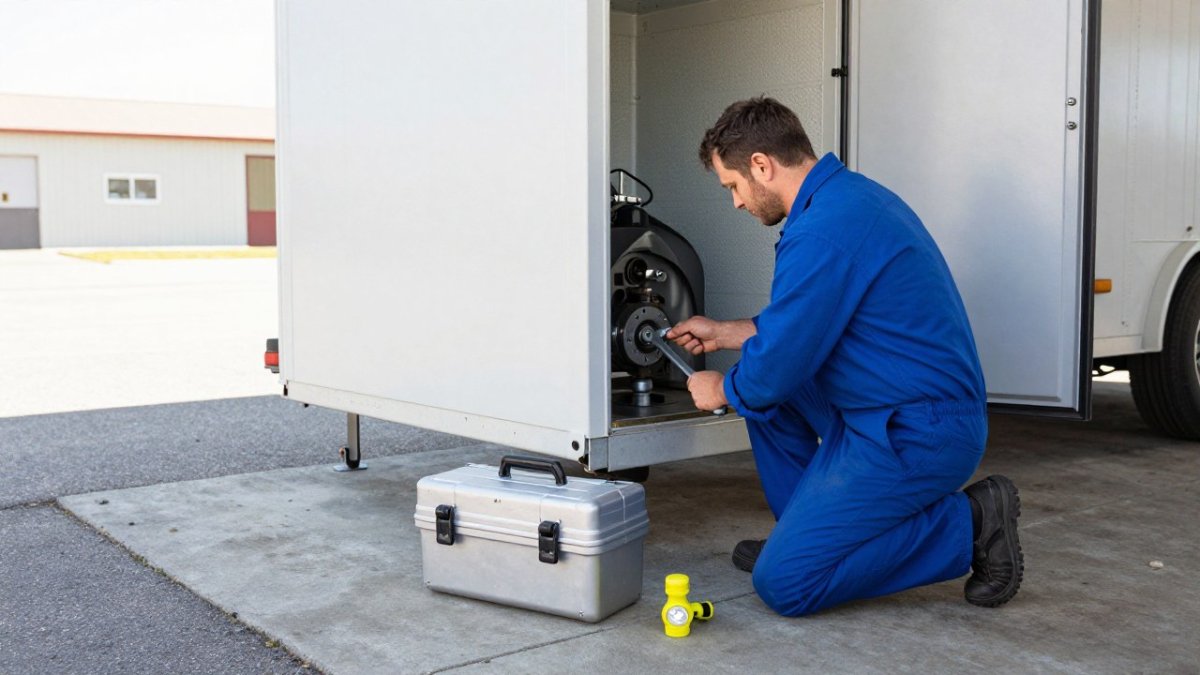
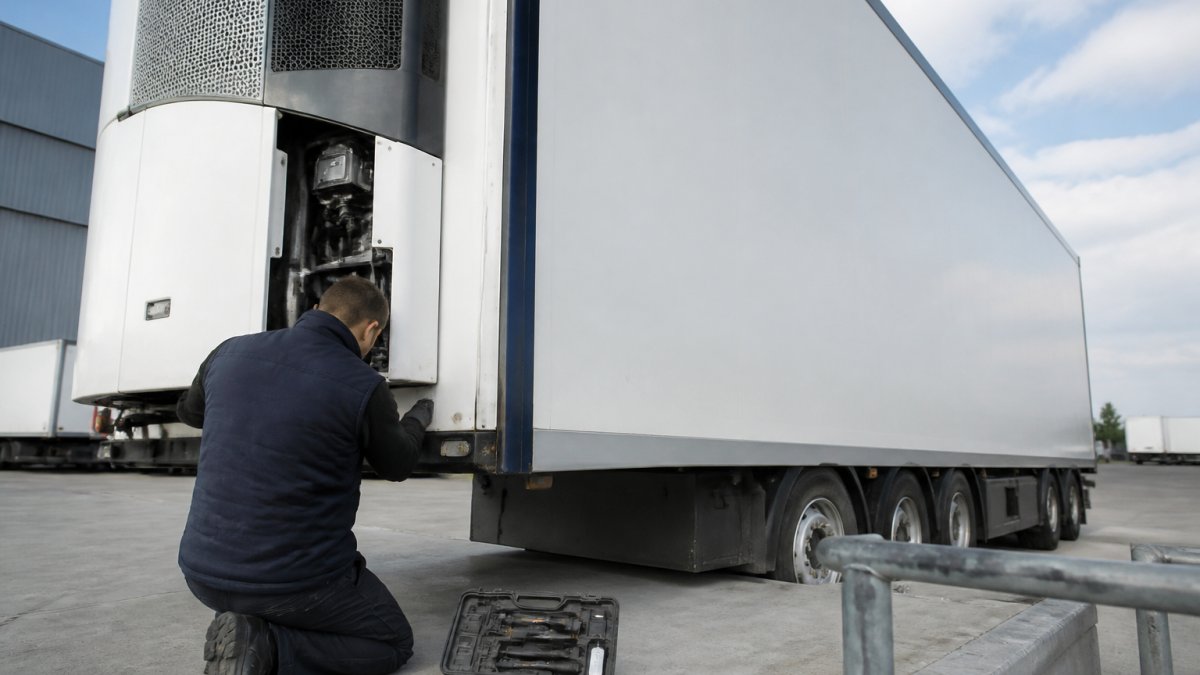
Mobile Reefer Repair: What You Pay for On-Site Response
Mobile reefer repair may cost more per hour than depot service, and that difference can buy response speed and convenience.

At Platinum Transport Refrigeration Services, our 100% mobile service means we come to your yard or roadside location rather than you hauling the trailer in.
Best for: fleets that cannot afford to move trailers and need units back in service fast. Skip if: a unit is already at a shop and the repair is not time-sensitive.
Preventative Maintenance Versus Emergency Repair Spending
Preventative maintenance is almost always cheaper than emergency repair, and the gap is largest for reefer units because failures compound. A small refrigerant leak caught at a scheduled service is a minor fix. The same leak ignored until the compressor fails is a major one.
Industry fleet guidance generally finds that reactive, unplanned repairs can cost more than the same work performed on a planned schedule, often because of overtime premiums, rush parts shipping, and towing. The Federal Motor Carrier Safety Administration publishes inspection and maintenance guidance that supports scheduled upkeep as a safety and cost practice.
A practical maintenance rhythm for most fleets:
Check refrigerant levels and inspect for leaks at every service interval
Verify thermostat calibration and temperature setpoints
Inspect belts, hoses, and electrical connections
Log fault codes from the controller before they become failures
Schedule pre-season inspections before peak demand
For deeper troubleshooting insights, our maintenance tips and Thermo King and Carrier troubleshooting updates are worth bookmarking.
Reefer Repair or Replacement: When the Math Tips
The repair-or-replace decision comes down to cost per remaining service year. A single major repair on an aging unit can approach the cost of a newer, more efficient replacement, especially once you add the downtime and fuel consumption of an older power unit.
Use this simple framework:
Situation | Lean Toward | Why |
One mid-cost repair, unit otherwise healthy | Repair | Lowest cost per service year |
Repeated failures in one season | Evaluate replacement | Cumulative cost and downtime climb fast |
Major overhaul on a high-hour unit | Replacement review | Repair cost nears replacement value |
Parts hard to source for the model | Replacement review | Sourcing delays add hidden downtime |
The threshold is not a fixed number. It is the point where repair cost plus expected downtime exceeds the cost of replacement spread over the years you will run it.
Insurance, Warranty, and Cargo Spoilage Liability
Insurance and warranty coverage can change what a breakdown actually costs you, and most cost guides skip this entirely. Cargo spoilage liability is the big one: if a load warms past safe limits, the claim can dwarf the repair bill.
Before you authorize emergency work, confirm three things:
Warranty status: is the failed component still covered, and does the repair need to be performed by an authorized provider to keep coverage valid?
Cargo insurance terms: does your policy cover spoilage from mechanical failure, and what documentation does the insurer require?
Documentation: keep the diagnostic report, parts list, and timestamps. Insurers ask for them.
A repair that is documented properly is far easier to claim than one that is not.
Authorizing Emergency Reefer Work with Confidence
Fleet managers who control repair costs well typically know which cost drivers apply to their units, ask about diagnostic and trip charges before approving work, and keep maintenance records that support warranty and insurance claims.
When a unit fails and you need it back in service, speed and expertise often shape the real cost. Platinum Transport Refrigeration Services provides 24-hour emergency reefer repair, 100% mobile service, dealer-level expertise, and a large variety of parts carried on-site. Request transport refrigeration service and get a mobile technician dispatched to your location.
Frequently Asked Questions
What factors affect emergency reefer repair costs the most?
The biggest drivers are labor timing, parts availability, and how far the technician travels. After-hours and weekend calls carry premium labor rates, and a diagnostic fee plus trip charge usually applies before any wrench turns. Parts markup and whether the component is stocked locally also swing the total. Equipment age matters too, because older units are more likely to need an overhaul rather than a quick fix. Get the diagnostic fee, trip charge, and hourly rate confirmed before you authorize work so the reefer repair cost holds no surprises.
Do emergency reefer repairs cost more after hours?
Yes. Night, weekend, and holiday calls typically carry overtime or shift premiums on top of the standard labor rate. Emergency repairs often cost more than the same job scheduled as planned maintenance, and labor timing premiums are a common reason. If the load can safely hold temperature until morning, a scheduled repair often costs less. If cargo is at risk, the premium is usually cheaper than spoilage, so weigh the temperature window before deciding.
How much can reefer downtime cost a fleet?
Downtime costs go well beyond the repair invoice. A reefer downtime event can include spoiled cargo, missed delivery windows, rescheduling fees, and idle driver pay while the trailer sits. Those indirect costs often exceed the repair itself, which is why fast mobile response matters. Track your own downtime cost per hour, including cargo value and delivery penalties, so you can compare it against any emergency premium a provider quotes. That number is the real benchmark for deciding how quickly to authorize a repair.
Is it cheaper to repair or replace a reefer unit?
It depends on the failure and the unit's age. A compressor replacement or major overhaul on an aging unit can approach the cost of a newer system, especially once repeated breakdowns and downtime are counted. As a rule of thumb, when repair quotes climb toward a large share of replacement cost and the unit keeps failing, replacement starts to win on total cost of ownership. Ask the technician for a repair-versus-replace comparison that includes expected remaining life, not just the immediate invoice.
What should I ask a mobile reefer repair technician before authorizing work?
Ask for the diagnostic fee, trip charge, and hourly rate up front, plus whether after-hours premiums apply. Confirm the technician's certification and experience with your specific unit brand and model. Ask whether the needed parts are on the truck or must be ordered, since that drives the repair timeline. Request a written estimate and approval before any work beyond diagnosis. Finally, ask what caused the failure and what preventative maintenance would stop it recurring, so the same reefer repair cost does not repeat next month.
A breakdown at 2 AM does not wait for business hours, and neither should your service partner. Platinum Transport Refrigeration Services brings 24-hour emergency response, 100% mobile service, and dealer-level expertise directly to your fleet, with parts on the truck to cut second trips. Get started with Platinum Transport Refrigeration Services and keep your cold chain moving.
Comments