7 Mobile Reefer Repair Steps That Cut Fleet Downtime
Last Updated: October 30, 2026
Quick Summary
Mobile reefer repair brings a technician to your truck instead of towing the trailer to a depot, so diagnosis and repair start where the unit failed. Call with the unit brand and model, exact symptom, fault codes, box temperature versus set point, and a precise location to avoid a second trip.
Secure cargo and confirm box temperature against the set point in the first five minutes.
Photograph the controller display and any alarm codes before calling dispatch.
Give a named truck stop, dock number, or mile marker, not just a highway.
Ask whether the after-hours number reaches a dispatcher or an answering service.
Confirm your location is inside the provider's service area before booking.
Table of Contents
Why Mobile Reefer Repair Beats Towing to a Depot
A loaded trailer with a failed reefer unit is a countdown timer. Every minute the box sits above its set point, the cargo inside moves closer to a claim, a rejected load, or a dumpster.
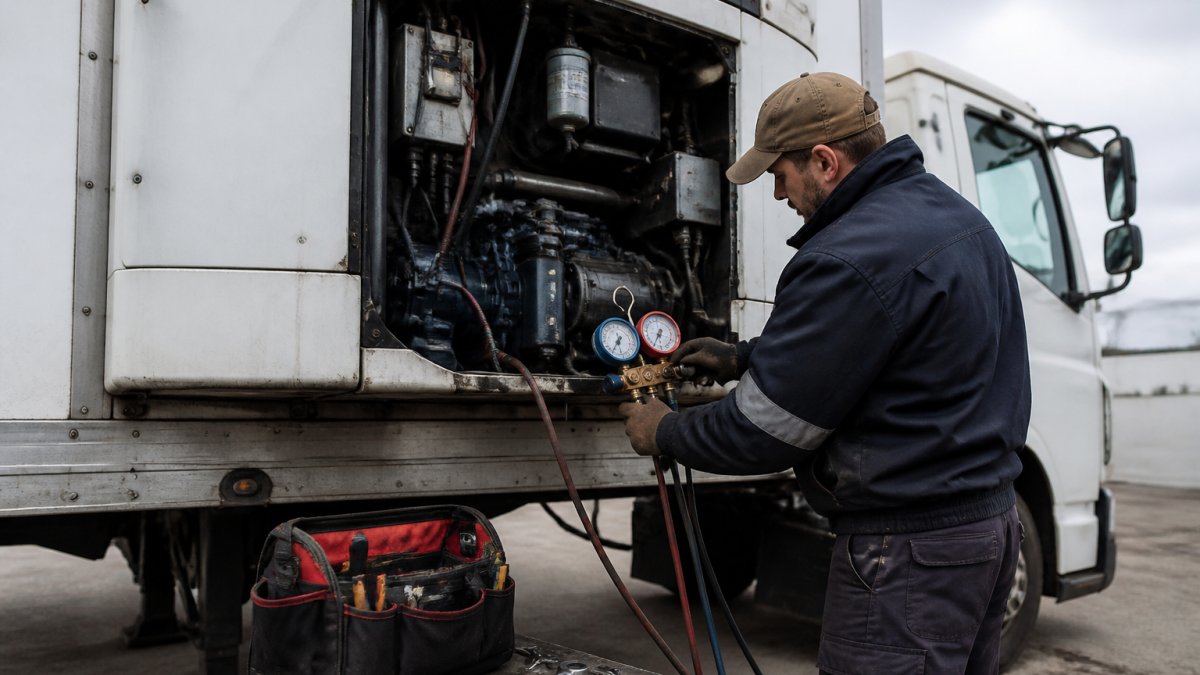
That is the core argument for mobile reefer repair: the technician comes to the truck, not the other way around.
Mobile service wins for three reasons:
No tow bill and no second wait. Towing a loaded trailer is its own logistical headache, and the depot queue starts after the tow ends.
The unit is diagnosed where it failed. Intermittent faults often behave differently after a bumpy tow.
The clock never stops on your cargo. A technician working at the truck stop or your yard keeps the load closer to a fix.
The trade-off is real: some major repairs or structural work may still need a shop.
What to Check Before You Call for Mobile Reefer Repair
The best emergency reefer service calls start with two minutes of homework. A dispatcher who knows the unit, the symptom, and the location can send the right technician with the right parts on the first trip.
Run this checklist before you dial:
Unit brand and model number (Thermo King, Carrier, or other)
The exact symptom: no start, not cooling, short cycling, alarm code, unusual noise
Any fault codes shown on the controller display
Calling with "the reefer is broken" and nothing else often produces a second trip, and a second trip is lost time you cannot bill back.
Watch out: if the unit is showing a high-temperature alarm with perishable cargo inside, say so on the call. Temperature protection changes the response priority, and the dispatcher needs that detail up front.
The 7-Step Breakdown Response for Emergency Reefer Service
Here is the sequence we walk drivers and fleet managers through when a unit fails on the road. Follow it in order and the repair starts faster.
Step | Action | Who Owns It | Time |
1 | Secure cargo and confirm temperature | Driver | First 5 minutes |
2 | Document the fault and codes | Driver | 5-10 minutes |
3 | Report location and unit details | Driver/dispatch | 5 minutes |
4 | Set a meeting point and access plan | Dispatch | On the call |
5 | Receive the technician and hand off | Driver | At arrival |
6 | Approve the diagnosis and repair | Fleet manager | 10-15 minutes |
7 | Log the repair and root cause | Fleet manager | After service |
Step 1: Secure the Cargo and Confirm the Temperature
Protect the load before you protect the schedule. Check the box temperature against the set point and note the gap. If the cargo is temperature-sensitive, keep doors closed and minimize opening the trailer.
Steps 2-4: Document the Fault, Report Location, and Set a Meeting Point
Photograph the controller display, including any alarm codes. Write down what the unit was doing right before it failed: defrost cycle, startup, door open, fuel level.
Location matters more than people expect. "Somewhere on I-182" is not a dispatch point. A named truck stop, a dock number, or a mile marker gets a mobile unit rolling in the right direction immediately.
Steps 5-7: Receive the Technician, Approve the Fix, and Log the Repair
Meet the technician at the unit, hand over the fault notes, and stay reachable for approval. Ask what failed and why, not just what it costs. That answer feeds your maintenance plan and prevents the repeat breakdown.
Then log it. A repair history with symptoms, codes, and parts replaced turns the next failure from a mystery into a pattern.
Reefer Unit Diagnostics: What a Mobile Technician Can Find On-Site
Reefer unit diagnostics is the process of testing a transport refrigeration unit's electrical, mechanical, and control systems at the vehicle to pinpoint why it stopped cooling or starting.

Symptom-to-Cause: What the Warning Signs Usually Mean
Most failures announce themselves before the unit quits. A driver who recognizes the symptom can give the dispatcher a better call and protect the cargo in the meantime.
Temperature deviation with the unit still running: the box is drifting above set point but the compressor or engine is still cycling. Common causes include a low refrigerant charge, a failing evaporator fan, a frosted coil from a stuck defrost cycle, or a door seal letting warm air in. Keep doors closed and note how fast the box is drifting.
High-temperature alarm: the controller has flagged the box as too warm. Treat this as a cargo-protection event first and a repair event second. Record the reading, the time, and the set point before you touch anything.
Unit shutdown or no-start: frequent causes are a low battery or charging fault, a fuel supply problem on engine-driven units, a safety switch trip, or a controller fault that needs the fault memory read before anything is replaced.
What a Driver Can Safely Check
A driver should not open refrigerant circuits or bypass safety switches. What a driver can do is gather evidence: photograph the controller display and any alarm codes, note the box temperature against the set point, check the fuel level on engine-driven units, confirm the unit is not in a defrost cycle, and look for obvious airflow obstructions at the evaporator.
Watch Out If the unit is down and the cargo is perishable, do not keep opening the trailer to check the temperature. Every door opening trades cold air for a reading you already have on the display. Record readings from the controller and keep the doors closed until the technician arrives.
What the Technician Tests On-Site
What we typically find on-site falls into a handful of buckets:
Electrical faults: bad connections, failed sensors, blown fuses, wiring damage
Refrigerant issues: low charge, leaks at fittings and lines
Control and alarm faults: controller errors, defrost problems, set point drift
The diagnostic step is where technical skill matters. Two units can throw the same alarm code for different reasons.
Protecting the Cargo While the Diagnosis Runs
Diagnosis takes time, and the cargo does not pause while it happens. Keep the doors closed and document readings at regular intervals. If the load is high-value or highly perishable, tell the dispatcher on the first call so the technician can plan the repair around the cargo.
24-Hour Reefer Repair: What Happens When You Call at 2 AM
A 2 AM call reaches a live response, not a voicemail box. That is the promise behind 24-hour reefer repair, and it is worth understanding what actually happens after you dial.
Ask for an estimate of the response time when you call.
What you should confirm when you call after hours:
Is the person answering a dispatcher or an answering service?
Can they quote a realistic arrival window for your location?
Will the technician arrive with parts for your symptom, or is this a diagnosis-only visit?
Watch out: an answering service that promises "someone will call you back" is not the same as dispatch. Ask directly whether the technician is being sent now.
Commercial Refrigeration Maintenance That Prevents Breakdowns
Commercial refrigeration maintenance is not glamorous, and that is exactly why fleets skip it until a failure forces the issue.
A practical prevention routine for transport units includes:
Pre-trip checks: belt tension, refrigerant sight glass, controller display, and fuel level on engine-driven units
Scheduled inspections: electrical connections, sensor calibration, and leak checks at fittings
Defrost cycle verification, especially in humid seasons
A planned inspection fits into your schedule. For fleets that want to go deeper on troubleshooting and upkeep between service visits, our maintenance tips and Thermo King and Carrier troubleshooting insights are worth a read before the next failure happens.
Service Coverage and What to Confirm Before You Book
Mobile reefer repair only works if the truck can actually reach you, and "we serve the Tri-Cities" is not a coverage answer. Coverage is the first question to settle, and it deserves a direct answer rather than a marketing claim.
What "Tri-Cities" Means for Dispatch
The Tri-Cities name gets used loosely, and that ambiguity costs drivers time. Before you book, confirm which Tri-Cities footprint the provider dispatches from and how far the mobile truck will travel. Ask the dispatcher to name the cities and towns inside the service area.
A practical coverage conversation covers four things:
Core area: the cities and towns the provider serves.
Out-of-area policy: what happens when your breakdown falls outside the service area.
Nearby Communities and Rural Routes
If your load is staged at a rural site, say so on the call so the dispatcher can confirm coverage.
What to Confirm Before You Book
When you book, confirm these five things:
Your location is inside the service area. Give the exact address, dock, or mile marker, not just the city.
The unit brand and model are supported. Ask about older units specifically if your fleet runs mixed vintages.
Parts availability for your symptom. A provider that carries a large variety of parts on-site shortens the visit.
The response window. Get an estimate, not a guarantee, and plan cargo protection around it.
After-hours terms. Confirm the process before you need it at 2 AM.
Pro Tip If your fleet is spread across multiple locations, give the dispatcher every address up front. Route planning is part of the job, and a dispatcher who sees the whole map can sequence visits instead of treating each call as a surprise.
We run a 100% mobile operation across the Tri-Cities. If your site is at the edge of our service area, ask directly before you commit to a service call.
Call Platinum Transport Refrigeration Services for Your Next Breakdown
The gap between a reefer failure and a cargo claim is measured in hours, and the response you choose decides how those hours get spent.
Platinum Transport Refrigeration Services offers 24-hour emergency reefer repair, 100% mobile service, and a large variety of parts carried on-site.
If you are ready to get a truck rolling, request transport refrigeration service from our team and give the dispatcher your unit details, symptom, and location.
Frequently Asked Questions
Can a mobile reefer technician repair my unit at my location?
Yes. A 100% mobile service brings the technician and a large variety of parts directly to your truck, trailer, or yard. Confirm the provider carries parts for your specific unit model.
What reefer problems can be diagnosed and repaired on-site?
Mobile reefer repair can address many common failures at your location. Ask the dispatcher to confirm the scope of work when you call. Structural damage or jobs needing a full shop lift may still require a depot, so ask the dispatcher to confirm scope when you call.
How can I reduce downtime while waiting for reefer service?
Protect the cargo first. Keep doors closed, confirm the load's temperature setpoint, and note the time the unit stopped cooling. Have your unit model, serial number, and exact location ready before the call, and clear access to the trailer. Accurate details on the call help the dispatcher plan the visit.
How often should commercial transport refrigeration units be maintained?
Most fleets schedule commercial refrigeration maintenance on a set interval tied to engine hours or mileage, plus a pre-season check before peak demand. Regular service catches weak belts, low refrigerant, and failing sensors before they strand a load. Ask your provider about a maintenance schedule that fits your routes.
A failed reefer unit is a problem you cannot schedule around, but you can decide who answers the call. Platinum Transport Refrigeration Services brings 24-hour emergency response, fully mobile service, and dealer-level diagnostics directly to your truck, trailer, or dock, with the parts on hand to finish the job. Get started with Platinum Transport Refrigeration Services and turn a breakdown into a repair with a finish line.
Comments