7 Things to Know: Valley Refrigeration vs Tri Cities Truck
Last Updated: November 17, 2026
Quick Summary
The Valley Refrigeration vs Tri Cities Truck comparison comes down to the service model, not the logo: one brings the shop to your yard, the other expects you to bring the trailer in. That difference drives downtime and the final invoice, so compare diagnostic fees, labor rates, parts markup, and warranty terms in writing.
Tri-Cities here means Kennewick, Pasco, and Richland in Washington, not Tennessee.
Valley Refrigeration is a common trade name used by more than one company, so confirm the specific business.
Compare total cost per breakdown rather than hourly rate when weighing depot versus mobile repair.
Ask whether warranty work requires a depot visit or whether a mobile technician comes to your yard.
Platinum Transport Refrigeration Services offers 24-hour emergency reefer repair and 100% mobile service.
Reefer down and need a mobile tech tonight?
Platinum TRS provides 24-hour mobile reefer repair across the Tri-Cities and the region.
Table of Contents
What the Valley Refrigeration vs Tri Cities Truck Question Actually Asks
Valley Refrigeration vs Tri Cities Truck Reviews: What Fleet Managers Say
Valley Refrigeration vs Tri Cities Truck Cost: What Drives the Bill
24-Hour Transport Refrigeration Repair: What After-Hours Coverage Looks Like
Mobile Truck Refrigeration Repair: Why On-Site Service Changes the Math
Brand Compatibility, Parts Stock, and Dealer-Level Diagnostics
Call Platinum Transport Refrigeration Services for Mobile Reefer Repair
What the Valley Refrigeration vs Tri Cities Truck Question Actually Asks
The Valley Refrigeration vs Tri Cities Truck comparison is really a question about which mobile reefer service keeps your trailers running in the Tri-Cities. Fleet managers searching this phrase have a unit down, a load at risk, or a contract up for renewal, and they want to know who shows up.
At Platinum Transport Refrigeration Services, we answer it the same way every time: compare the service model, not the logo. One model brings the shop to your yard; the other expects you to bring the trailer to the shop. That difference drives everything from downtime to the final invoice.
Which Tri-Cities, and Which Businesses
Start with geography, because the phrase hides two ambiguities. "Tri-Cities" in this context means Kennewick, Pasco, and Richland in Washington, not the Tri-Cities region of Tennessee or any other metro using the nickname.
"Valley Refrigeration" is a common trade name used by more than one company. Before comparing anyone, confirm you are looking at the specific business your drivers called, with its own address, phone number, and technicians. Pull the business license and physical location before you sign.
Valley Refrigeration vs Tri Cities Truck Reviews: What Fleet Managers Say
A review that says "fast" without naming the unit or repair tells you little; one that says "had the compressor on the truck and we rolled in ninety minutes" tells you a great deal.
How to Read Reviews for Reefer Repair
Treat reviews as evidence, and weigh them by specificity. A short checklist keeps the process honest:
Does the review name the equipment brand or unit type?
Does it describe a response window, even roughly?
Does it mention a repeat visit, meaning the first fix failed?
Is the reviewer a business with a fleet, or a one-time customer?
Do multiple reviews describe the same strength or the same failure?
Are recent reviews consistent with older ones, or did service quality shift?
Call the provider and ask how they handle a warranty callback, the answer usually matches the reviews.
Valley Refrigeration vs Tri Cities Truck Cost: What Drives the Bill
Repair cost depends on several variables, including technician travel distance, time of call, parts needed, and whether the repair is diagnostic-only or a full component swap. Pricing depends on these factors, so request a current quote from the provider directly.
What matters is total cost per breakdown, not hourly rate. A depot repair adds a tow or lost driver hours; a mobile repair trades a higher call-out for zero transport and a faster return to route.
The Four Line Items on a Reefer Service Invoice
Transport refrigeration invoices commonly itemize the following lines, and knowing them helps you compare providers:
Diagnostic or call-out fee. A flat charge to dispatch a technician and identify the fault. Some providers waive it if you approve the repair; others bill it separately. Ask which applies before you authorize work.
Labor time. Billed hourly or in fractions of an hour, often with a higher rate for after-hours, weekends, and holidays. Ask whether travel time to your yard is billed as labor or absorbed into the call-out.
Parts. Billed at list, at list plus a markup, or at a fleet-negotiated rate. The markup percentage matters more than the list price on high-failure components like compressors, receivers, and electronic controllers.
Shop supplies and refrigerant. Recovery, recharge, and disposal of refrigerant are separate line items under federal refrigerant-handling rules, and they are not optional.
Estimate Policy: What to Ask Before You Approve Work
Ask any provider for a written estimate policy before you authorize work. Ask whether the estimate is binding, what threshold triggers a call for approval, and how a diagnostic that reveals a second, unrelated fault is handled.
The last question matters most on older units. A technician dispatched for a no-cool fault may find a failed compressor and, once the system is open, a plugged condenser or leaking evaporator. A clear approval threshold means a call before the invoice doubles.
Warranty Terms on Parts and Labor
Ask for the parts warranty period separately from labor, because they often differ: a longer manufacturer-backed parts warranty and a shorter shop-backed labor warranty. If the same component fails inside the labor window, you should not pay twice.
Watch out: confirm whether warranty work requires you to return the trailer to the provider's shop or whether a mobile technician will come to your yard. A parts warranty that requires a depot visit can erase the savings on a mobile repair.
How to Compare Bids Without a Rate Card
Since providers do not publish a full rate card, compare on structure. Request in writing the diagnostic fee, standard and after-hours labor rates, parts markup policy, estimate approval threshold, and parts and labor warranty periods. Model a typical breakdown, one after-hours call, one diagnostic, one common component replacement, and compare that total, not an advertised hourly rate.
For a deeper breakdown of the real numbers, read our guide on how to calculate the average cost of a reefer unit breakdown.
24-Hour Transport Refrigeration Repair: What After-Hours Coverage Looks Like
24-hour transport refrigeration repair means a dispatcher is available at any hour to route a technician to your unit. Ask who answers the phone, where the nearest technician is based, and the realistic arrival window for your yard.
Platinum Transport Refrigeration Services offers 24-hour emergency reefer repair for this scenario, with mobile technicians and dealer-level expertise. You can reach the line directly at (509) 547-5262.
Mobile Truck Refrigeration Repair: Why On-Site Service Changes the Math
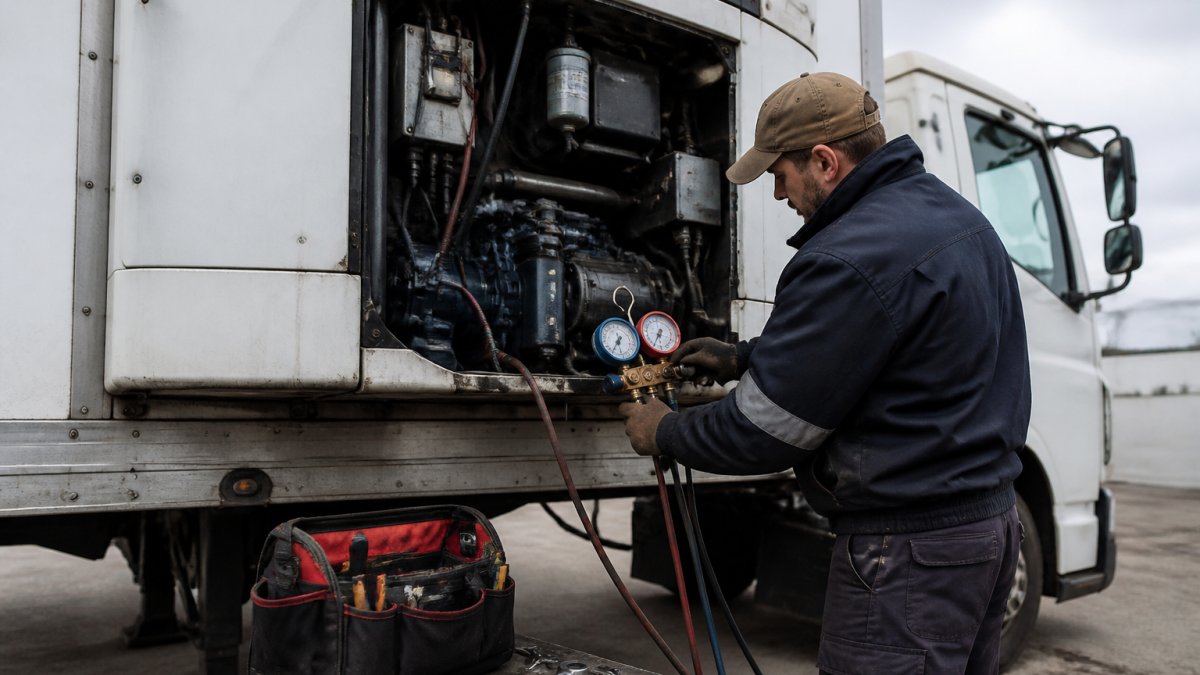
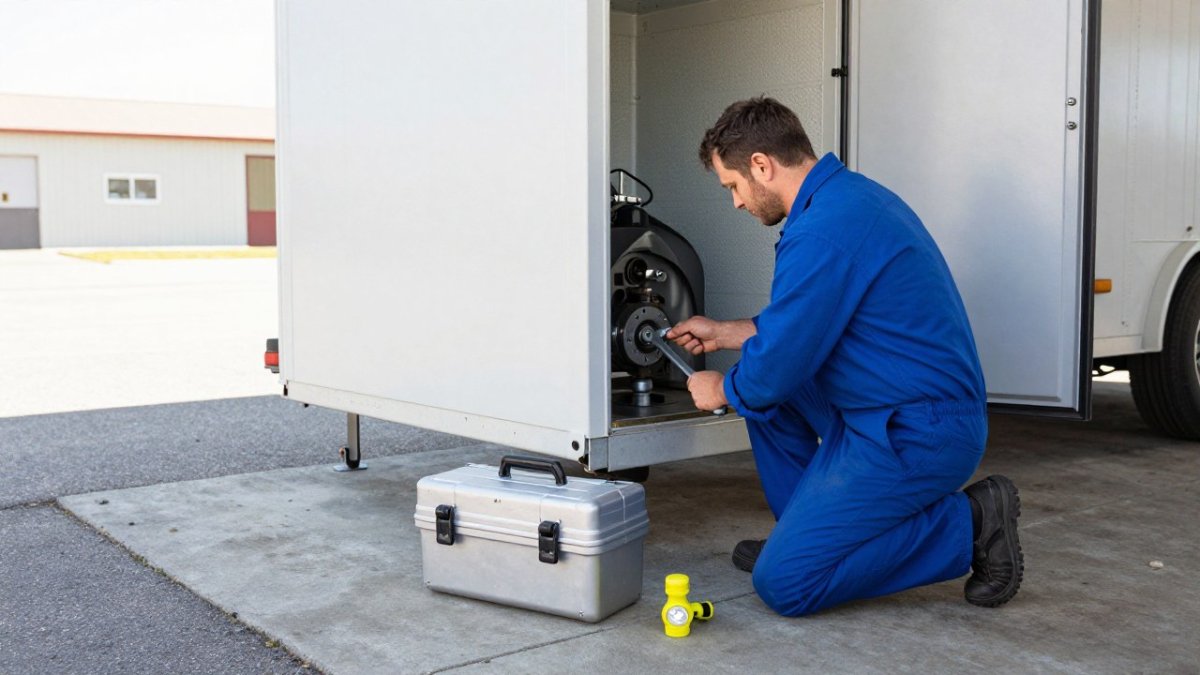
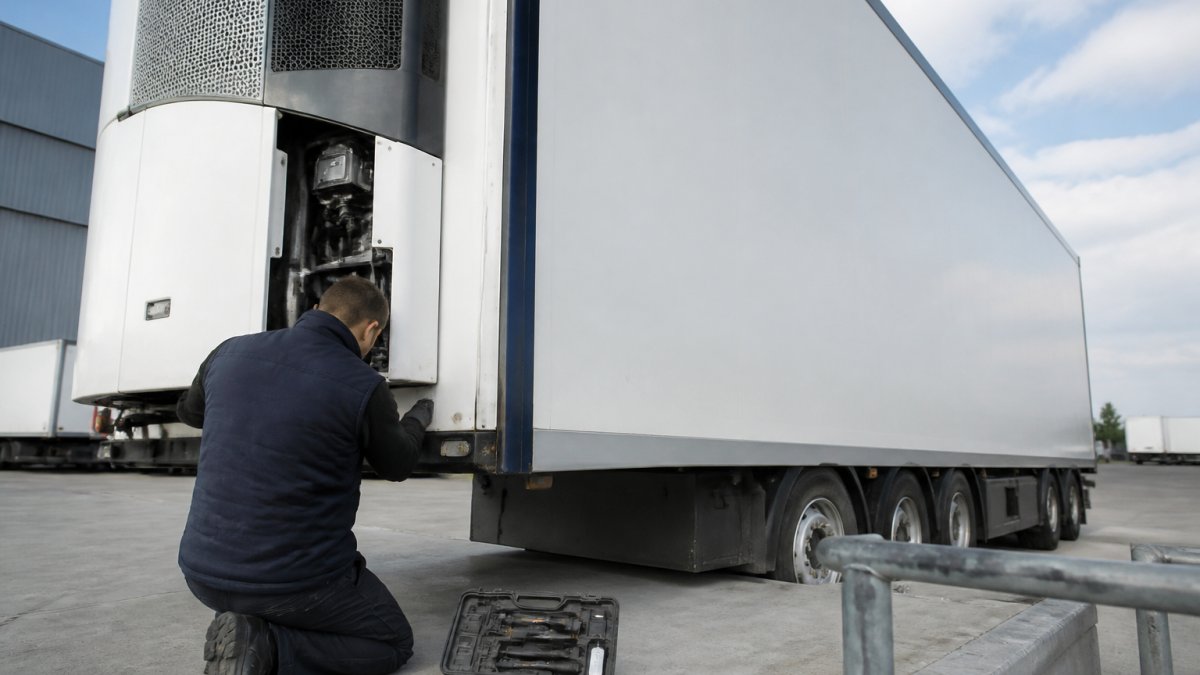
Mobile truck refrigeration repair brings the technician to your unit. Platinum Transport Refrigeration Services provides 100% mobile service, so repairs can be performed where the unit sits.

Platinum Transport Refrigeration Services provides 100% mobile coverage, confirm your locations fall inside the reefer repair service area before you call.
Brand Compatibility, Parts Stock, and Dealer-Level Diagnostics
Brand compatibility decides whether a provider can actually fix your unit or just diagnose it. Transport refrigeration units from Thermo King and Carrier use different controllers, refrigerants, and diagnostic protocols, so brand-specific capability matters when comparing providers.
What Dealer-Level Diagnostics Actually Means
Dealer-level expertise is the level of technical capability a provider brings to complex systems. Ask any provider to explain how they diagnose brand-specific faults on your units.
Parts Stock: What Should Be on the Truck
Mobile service is most effective when the technician carries the parts your units need. Parts needs generally fall into three tiers:
High-failure consumables. Filters, belts, relays, fuses, and sensors that fail often and cost little to carry.
Mid-tier components. Expansion valves, receiver-driers, solenoids, and contactors that are common enough to justify truck stock.
Major components. Compressors, condensers, evaporators, and controllers. Most mobile providers carry a limited selection and order the rest, which is why the second-visit question matters.
Ask any provider how their on-site stock is organized, and how often a job requires a second visit for an ordered part.
Warranty-Eligible Work and Manufacturer Requirements
Warranty-eligible work carries its own requirements. Manufacturers typically specify approved parts and documented diagnostic procedures, so ask any provider how they document warranty-eligible repairs.
Ask whether the provider performs warranty-eligible repairs on your brands and how they document them.
Matching the Provider to Your Unit Mix
Compatibility is fleet-specific: units with electronic controllers may need different support than older units with mechanical controls. List your unit makes, models, and model years, then ask each provider which brands and models they service.
Platinum Transport Refrigeration Services handles both major platforms; fleet owners running Thermo King equipment can review mobile Thermo King reefer repair, and Carrier operators can check Carrier reefer repair coverage.
Ask any provider for the certifications and diagnostic software version their technicians carry, and whether their work is warranty-compliant.
Choosing a Transport Refrigeration Provider for Your Fleet
Choosing a provider comes down to criteria you can verify. Use this framework and score each candidate from one to five on every line, then weight the rows that matter most to your operation:
Criterion | What to Verify | Why It Matters |
Response model | Mobile on-site vs. depot drop-off | Determines downtime per breakdown |
After-hours coverage | Live dispatcher, realistic arrival window | Protects loads outside business hours |
Brand capability | Thermo King and Carrier diagnostics | Avoids dealer referrals mid-repair |
Parts on board | On-site stock depth by unit model | Prevents second visits |
Terms | Estimate policy, warranty on parts and labor | Controls total cost and disputes |
Weight parts and brand capability heavily if your fleet mixes older and newer units, since the two can require different components and diagnostic tools.
Call Platinum Transport Refrigeration Services for Mobile Reefer Repair
The decision between a depot shop and a mobile provider depends in part on how much downtime your operation can absorb.
Platinum Transport Refrigeration Services offers 24-hour emergency reefer repair, 100% mobile service, dealer-level expertise, and a large variety of parts carried on-site. We diagnose and repair your units where they are.
Call (509) 547-5262 to schedule service or talk through your fleet's coverage needs.
When a reefer goes down, the clock on your load starts immediately. Platinum Transport Refrigeration Services answers that call around the clock, sends a mobile technician with dealer-level diagnostics, and carries the parts that get trailers back on the road. Get started with Platinum Transport Refrigeration Services and keep your cold chain moving without the depot detour.
Frequently Asked Questions
Does Tri Cities Truck provide mobile refrigeration repair?
Mobile capability is the first thing to confirm when comparing Valley Refrigeration vs Tri Cities Truck. Ask each provider directly whether a technician comes to your yard or whether units must be dropped off at a depot. For fleets spread across multiple Tri-Cities locations, mobile service can reduce the need for tow or driver time to a depot. Get the answer in writing, along with the radius they cover and any trip charge, before you commit a unit to either shop.
Which provider offers 24-hour emergency truck refrigeration repair?
Confirm after-hours coverage by calling each provider's line on a weekend evening and timing the response. A true 24-hour transport refrigeration repair operation answers with a dispatcher who can quote an arrival window, not a voicemail box. Ask what the after-hours rate is and whether weekend calls carry a premium. Platinum Transport Refrigeration Services offers 24-hour emergency reefer repair, so after-hours calls can be placed at any time.
How much does mobile transport refrigeration repair cost?
Pricing depends on the fault, the unit model, parts needed, and the time of day, so request a current quote from the provider directly. When comparing Valley Refrigeration vs Tri Cities Truck cost, ask both for the diagnostic charge, hourly labor rate, after-hours multiplier, and warranty terms on parts and labor. Request a written estimate before work starts.
Can a mobile repair service work on Thermo King and Carrier units?
Ask any provider which transport refrigeration brands and model years they support. Parts stock is a practical question: ask what parts the provider carries on-site for your units. Ask which brands and model years the provider supports and what parts they carry on-site.
Comments