Are On-Site Reefer Parts Worth the Investment?
Last Updated: October 26, 2026
Quick Summary
On-site reefer parts let a service truck complete the repair during the first visit instead of the second, trading a wait for a wrench. Because perishable food can become unsafe in hours outside its temperature range, carrying high-failure parts on the truck protects cargo and avoids trailer idle time.
A well-stocked service truck carries belts, filters, fan motors, thermostats, sensors, relays, gaskets, refrigerant and fittings.
A reefer breakdown has four cost layers, and only one of them is the repair bill.
Mobile service with parts on the truck fits fleets spread across a region with tight delivery windows.
Rank parts by failure rate and lead time, stocking high-failure, long-lead items on site with no exceptions.
Check refrigerant charge, clean coils and inspect belts and fan motors monthly to prevent repeat breakdowns.
Table of Contents
Why On-Site Reefer Parts Change the Downtime Equation
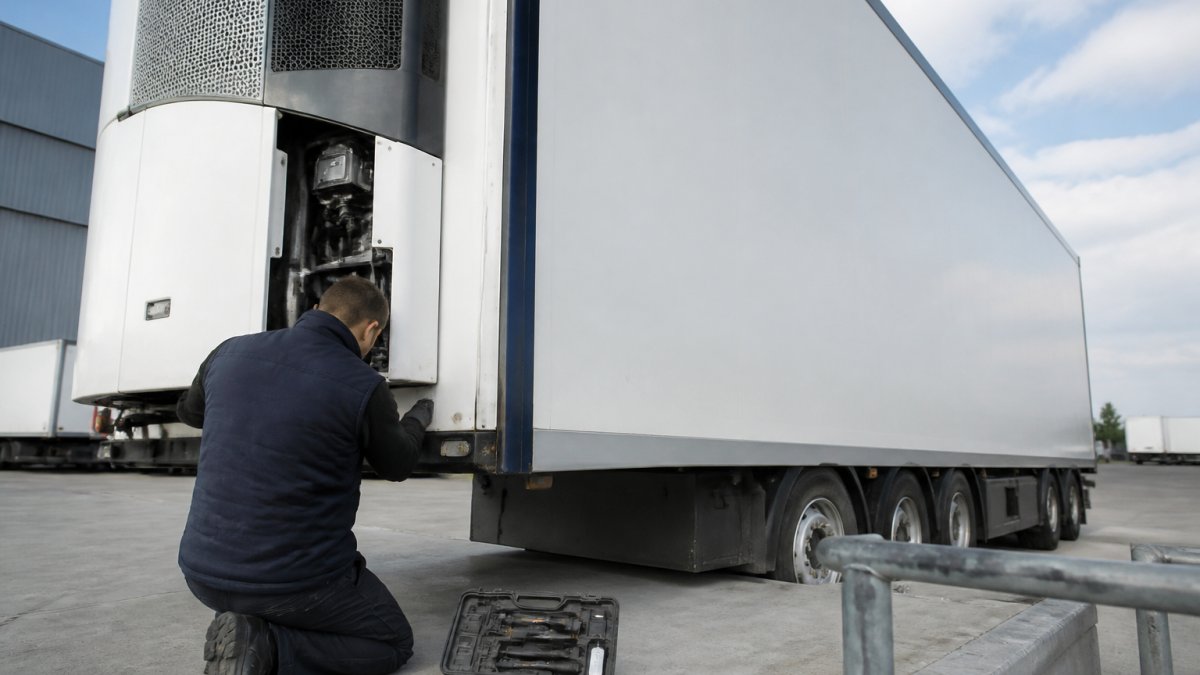
A refrigerated trailer that loses its cooling unit on a Friday night does not wait for a Monday parts order. It sits, and every hour it sits, temperature-sensitive cargo moves closer to the danger zone.
That is the core problem with how most fleets handle transport refrigeration. The unit breaks, a technician diagnoses it, and then everyone waits for a part. Sometimes that part arrives in a day. Sometimes it takes three. According to U.S. Food and Drug Administration guidance on food safety, perishable food held outside its required temperature range can become unsafe in a matter of hours, not days.
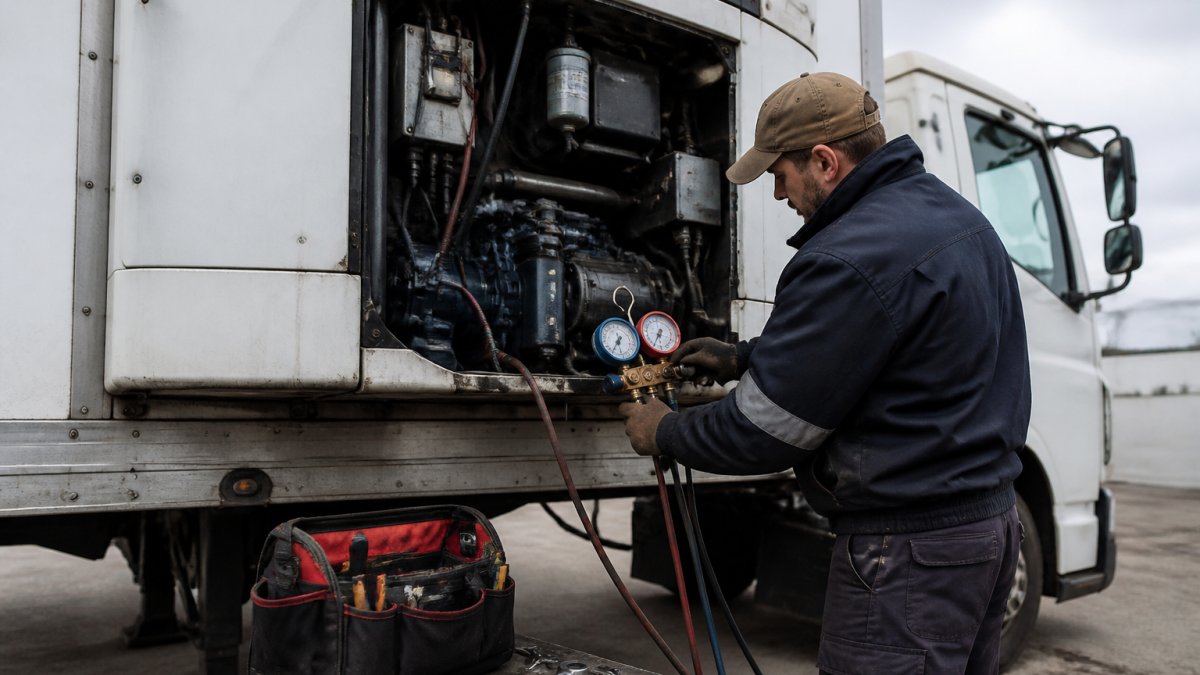
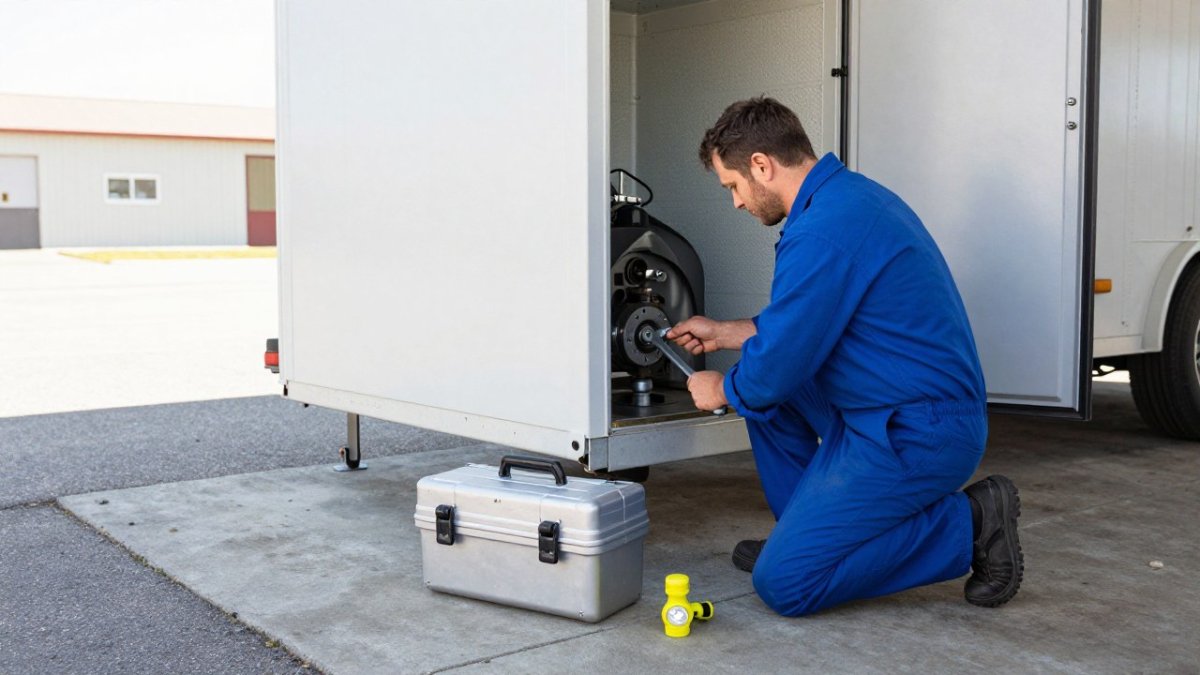
This is where on-site reefer parts change the math. When a service truck carries the parts your units actually need, the repair happens during the first visit instead of the second. The benefits of on site reefer parts come down to one thing: you trade a wait for a wrench.
At Platinum Transport Refrigeration Services, we built our mobile service around that idea. Our trucks carry a large variety of parts on-site.
Below, we break down how cooling systems work, what warning signs to watch, and how to plan a critical-spares inventory.
How Refrigeration Units Keep Cargo Temperature Under Control
A transport refrigeration unit is a self-contained cooling system mounted on a trailer or truck body. It pulls heat out of the insulated compartment and moves it outside, holding cargo within a set temperature range.
Here is the short version of how that works:
The compressor pressurizes refrigerant and starts the cooling cycle.
The condenser releases heat pulled from the trailer.
The evaporator absorbs heat from inside the cargo space.
The fans push cold air through the load so airflow reaches every pallet.
The thermostat and controls hold the set point and adjust as outside temperatures swing.
Temperature control depends on all of these parts working together.
Insulation and door seals matter just as much.
Signs Your Transport Refrigeration Needs Service
Watch for these signals that your transport refrigeration needs service. Catching them early is the difference between a repair and a lost load.
The unit runs constantly but the trailer never reaches its set point.
Temperature readings drift above or below the target range.
The defrost cycle fails, leaving ice on the evaporator coil.
Unusual noise from the compressor or fan bearings.
Error codes on the control panel that reset but keep coming back.
Higher fuel consumption on routes that used to run lean.
Visible refrigerant leaks or oily residue near fittings.
When Reefer Temperature Problems Turn Into Spoiled Loads
Food safety rules make this worse. Under USDA Food Safety and Inspection Service guidance, temperature abuse during transport can make product unfit for sale, and that liability lands on the shipper and carrier. A single spoiled reefer load can cost more than a year of preventive maintenance.
Mobile Reefer Repair: What Parts on the Truck Actually Deliver

A well-stocked service truck typically carries:
Belts, filters, and fan motors
Thermostats and temperature sensors
Compressor contactors and relays
Door gaskets and seals
Refrigerant and fittings
Common control board components
The downtime math behind first-visit repair
A reefer breakdown has four cost layers, and only one of them is the repair bill:
Trailer idle hours. A unit down for a day removes a trailer from revenue service. At typical utilization, that is a full day of freight capacity gone.
Emergency freight and towing. Moving a loaded trailer to a depot or paying a premium for an emergency part adds cost that never appears on the repair invoice.
Cargo exposure. Every hour outside the set point narrows the safety margin on perishable and pharmaceutical loads.
Missed delivery windows. Late arrivals can trigger chargebacks or lost contracts, and those losses dwarf the part price.
On-site parts versus mobile service versus centralized depots
These three models solve different problems, and the right choice depends on fleet size, location, and how close you are to a supplier:
Model | Best fit | Main trade-off |
On-site parts inventory at your yard | Fleets with a dedicated shop and predictable failure patterns | Ties up capital in parts and requires storage and tracking discipline |
Mobile service with parts on the truck | Fleets spread across a region with tight delivery windows | The truck cannot carry every part for every model, so some jobs still need a second visit |
Centralized depot | Small fleets near a dealer with fast counter service | Towing and queue time can stretch a repair into multiple days |
Reefer Unit Maintenance That Prevents Repeat Breakdowns
A practical maintenance rhythm looks like this: for deeper maintenance tips and troubleshooting articles, our blog covers Thermo King and Carrier insights.
Task | Frequency | Why It Matters |
Check refrigerant charge and look for leaks | Monthly | Low charge raises cargo temperature |
Clean condenser and evaporator coils | Monthly | Dirty coils cut cooling capacity |
Inspect belts and fan motors | Monthly | Worn belts fail without warning |
Test door seals and gaskets | Quarterly | Bad seals let heat transfer in |
Full system diagnostic | Seasonal | Catches sensor and control faults early |
Planning a Critical-Spares Inventory for Your Fleet
A critical-spares inventory is the set of parts you keep on hand so a failure never becomes a wait. Building one takes method: most fleets either overstock slow movers or understock the parts that actually strand trailers, and both mistakes cost money.
Step 1: Rank parts by failure rate and lead time
A simple scoring approach works well:
High failure, long lead time: stock on site, no exceptions.
High failure, short lead time: stock a working quantity and reorder on use.
Low failure, long lead time: stock one per model as insurance.
Low failure, short lead time: source on demand.
Step 2: Set reorder points from usage, not guesswork
If a fan motor is used twice a month and takes two weeks to arrive, the reorder point is roughly one unit plus a buffer of one. If usage is seasonal, set it for the busy season, not the annual average, and review quarterly.
Pro Tip Track usage by part number and by unit model. A part that fails on one model far more than another is a signal about that model, not about the part.
Step 3: Decide what stays on site versus what a partner carries
Not every part belongs in your own inventory. The decision comes down to cost, space, and how fast you can get the part another way:
Tier 1 (always stock): Belts, filters, sensors, relays, gaskets. Cheap, common, fast to swap.
Tier 2 (stock one per model): Fan motors, contactors, thermostats. Moderate cost, moderate failure rate.
Tier 3 (source on demand): Compressors, control boards, major assemblies. Expensive, rare, better handled by a service partner that carries them or can source them quickly.
A few rules keep the inventory honest:
Match every part to the exact model numbers in your fleet.
Track usage so you reorder before you run out.
Store parts clean and dry, away from heat and moisture.
Review the list every season as your fleet changes.
Step 4: Control the inventory so it does not rot on the shelf
Parts compatibility and warranty matter here. A cheap aftermarket part that fails in a month costs more than a quality part that lasts. Confirm any part you stock meets the unit maker's specs and does not void coverage, and keep the traceability records warranty claims require.
Choosing a Parts-Ready Service Partner for Your Fleet
Do their trucks carry high-failure parts on board, or do they order everything?
Can they service the mix of older and newer units in your fleet?
What is their real response time at 2 AM on a Sunday?
Do they have dealer-level training on the brands you run?
Can they show a parts list for your specific models?
How do they handle warranty on parts and labor?
At Platinum Transport Refrigeration Services, we run 100% mobile service across the Tri-Cities with dealer-level expertise and a large variety of parts carried on-site. When you are ready, request transport refrigeration service.
Frequently Asked Questions
How can on-site reefer parts reduce repair delays?
The delay in most reefer repairs is not the wrench time, it is the wait for a part. When a technician arrives with common failure parts already stocked, the diagnosis and the fix happen in the same visit instead of two. Compressors, fan motors, relays, sensors, and refrigerant components are typical candidates for stocking. The result is fewer return trips, shorter unit downtime, and less risk to temperature-sensitive freight sitting on the dock.
What reefer parts should a mobile repair technician carry?
A practical spares kit covers the parts that fail most often across the fleet's specific makes and models: belts, filters, fan and blower motors, relays and fuses, temperature sensors, refrigerant fittings, and common control-board components. The right list depends on your unit mix, so a good service partner builds it around your equipment rather than a generic truck stock. Ask for the list in writing before you commit.
Can on-site reefer parts help prevent refrigerated cargo temperature problems?
Indirectly, yes. A unit that gets fixed on the first visit spends less time running outside its temperature range, which lowers the odds of a load drifting. Parts availability does not replace temperature monitoring or pre-trip checks, but it shortens the window between a fault appearing and the repair being complete. For produce, meat, dairy, and pharmaceutical freight, that shorter window is where spoilage risk lives.
How do I know a service provider actually stocks the parts my units need?
Ask two questions before signing on: which makes and models do you carry parts for, and can I see the stock list for my fleet's units. A provider with dealer-level expertise should be able to name the specific components they hold for your equipment. Also ask what happens when a part is not on the truck, how long the order takes, and whether a loaner or temporary fix is available in the meantime.
The difference between a repair and a lost load often comes down to whether the right part was within reach. Platinum Transport Refrigeration Services keeps 24-hour emergency repair, 100% mobile service, and a large on-site parts inventory on every call, so your fleet spends less time waiting and more time delivering. Get started with Platinum Transport Refrigeration Services and keep your cold chain moving. Call (509) 547-5262.
Comments