Diesel Reefer Engine Repair Service: What to Know
Last Updated: November 25, 2026
Quick Summary
Diesel reefer engine repair covers diagnosing and fixing a refrigeration unit's diesel engine, fuel, electrical and cooling faults, often through mobile service. Early warning signs include temperature drift above setpoint, unusual engine noise, hard starts and visible leaks, and catching them early protects cargo and schedules.
Check for temperature drift, unusual noise, hard starts and leaks before a breakdown occurs.
Retrieve fault codes before clearing them, so intermittent faults stay in the record.
Run a full pull-down and load test after any repair to confirm it holds.
Mobile repair brings a technician and parts to the trailer, protecting temperature-sensitive cargo.
Platinum Transport Refrigeration Services offers 24-hour emergency mobile reefer repair at (509) 547-5262.
Table of Contents
A diesel reefer engine usually gives warning signs before it fails, and catching them early through timely reefer engine repair protects both your cargo and your schedule. Fleets across the Tri-Cities often report the same symptoms: a unit that struggles to hold setpoint, a noisy engine, or a fault code that reappears after a reset. Many of these problems are easier to fix when they are caught early, before a breakdown.
The most reliable signs are temperature drift, unusual noise, hard starts, and visible leaks. If the trailer temperature climbs above setpoint, or the unit cycles on and off more than normal, the refrigeration system or its diesel engine is working harder than it should. Check the unit's display and the logged temperature data at each stop.
Listen to the engine. Knocking, rough idling, or a change in exhaust color often points to fuel delivery or combustion problems. Hard starting in cold weather is another early signal, often tied to glow plugs, the starter, or the battery and charging circuit.
Look under the unit and around the engine. Oil, coolant, or fuel residue can point to a failing seal, a loose hose, or a cracked fitting. Small leaks rarely stay small, so treat any new drip as a repair job, not a cosmetic issue.
Watch out: Do not keep running a unit that is overheating or losing oil pressure. Continuing to run it can turn a fuel filter or belt problem into a damaged engine.

Step-by-Step Diesel Reefer Engine Troubleshooting
Start with the simplest checks before moving to electrical or engine diagnostics. Many reefer complaints trace back to fuel supply, a weak battery, or a clogged filter, and these are fast to verify.
Confirm the setpoint and the actual temperature readings on the controller.
Check fuel level and look for water or sediment in the fuel filter.
Inspect the battery voltage and terminal condition.
Check the belts, hoses, and coolant level with the engine cold.
Review the controller for active or stored fault codes before clearing anything.
Run the unit through a controlled cycle and watch for the failure to repeat.
Record what you find at each step. Written notes make it much easier for a technician to pick up where you left off.
Reefer Fault Codes and the Diesel Engine Diagnostics Workflow
Fault codes tell you where the controller saw a problem, but they do not always say what caused it. The gap most service pages leave is the workflow between reading a code and confirming a repair, so here is the sequence a technician should follow, and what each step is actually looking for.
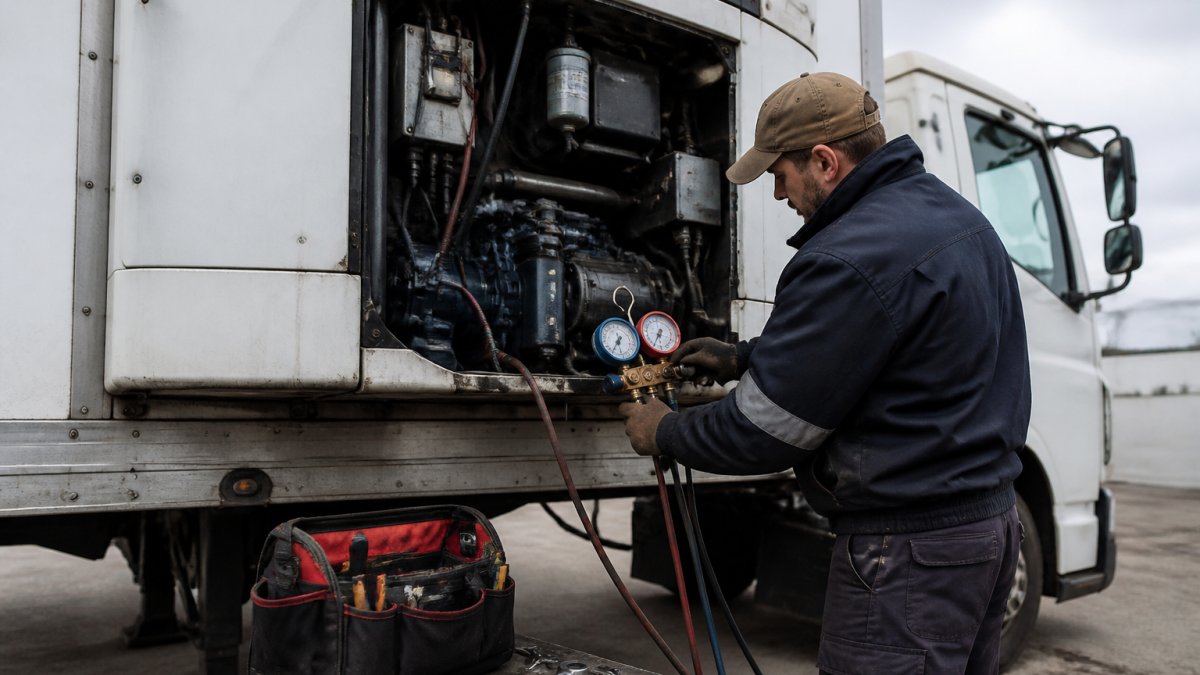
1. Retrieve codes without clearing them. Pull active and stored codes from the controller before touching anything. Stored codes preserve the history of intermittent faults that may not be active when the unit is in the bay. Clearing first erases the evidence.
2. Record the conditions. Note ambient temperature, setpoint, engine hours, load status, and whether the fault appeared at startup, during a pull-down, or while cycling. A code that only appears on a hot restart points in a different direction than one that appears under load.
3. Group the code by system. Most reefer controllers organize faults into families: engine and fuel, electrical and sensor, refrigeration and refrigerant, and controller/communication. Grouping narrows the test path before any part is swapped.
4. Test the circuit, not just the sensor. A sensor code can come from a bad sensor, a chafed harness, a corroded connector, or a reference-voltage problem at the controller. Back-probe the connector, check resistance across the sensor, and verify supply voltage before condemning the part.
5. Compare live data to expected values. With the unit running, compare engine coolant temperature, oil pressure, battery voltage, and refrigerant pressures against the controller's displayed readings. A sensor that reads plausibly but drifts under load is a common cause of repeat codes.
6. Repair, then verify under load. After the repair, run the unit through a full pull-down and a controlled cycle with a load on it. A repair that passes at idle but fails under load is not finished.
Watch out: Clearing a code to "see if it comes back" without recording the conditions usually guarantees a repeat call, because the diagnostic evidence is gone by the time the technician arrives.
A written record of codes, conditions, and test results at each step is what separates a one-visit repair from a parts-cannon approach. Repeat fault-code calls often trace back to a skipped circuit test or an unverified repair.
How Mobile Reefer Repair Keeps Your Cargo and Schedule Intact
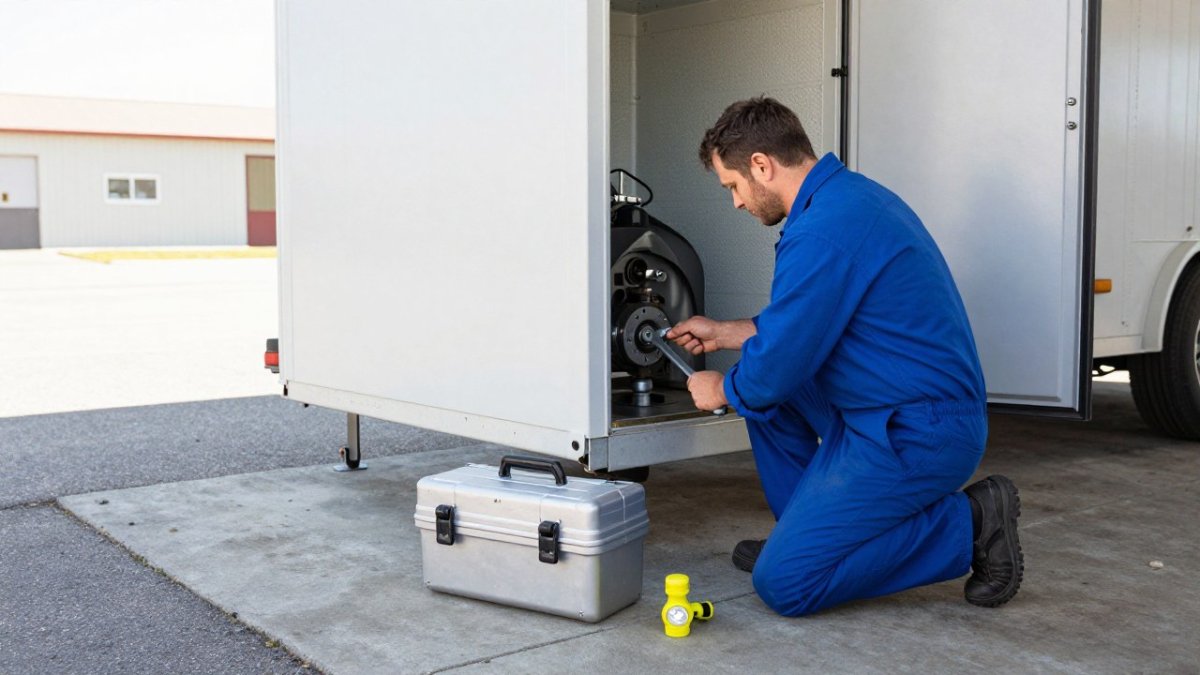
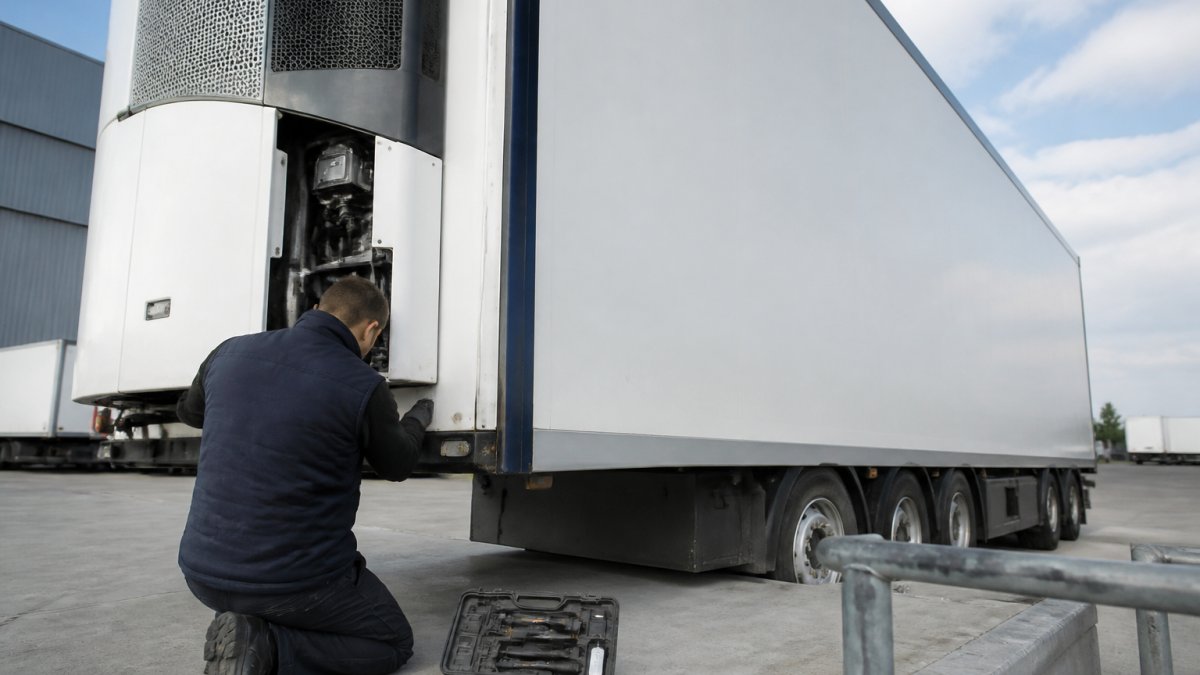
When a unit fails on the road, the first priority is protecting the load. Mobile repair brings a technician and parts to the trailer, so the unit does not have to travel to a depot while temperature-sensitive cargo is at risk.
Platinum Transport Refrigeration Services offers 24-hour emergency mobile reefer repair in the Tri-Cities. Call (509) 547-5262 any time.
Keeping product within its required temperature range during a breakdown is a major part of protecting the load.
Preventive Maintenance Schedule for Reefer Units
Preventive maintenance costs less than emergency repair because it catches wear before it becomes a failure. A practical schedule depends on the unit's age, the operating hours, and the manufacturer's guidance, but most fleets benefit from these checkpoints:
Each trip: pre-trip inspection, temperature check, fuel and oil levels
Weekly: battery condition, belt tension, visible leaks
Monthly: filter inspection, electrical connections, controller data review
Per the manufacturer's interval: oil and filter changes, coolant service, full diagnostic scan
Keep records of every service. A clear history helps a technician spot patterns, such as a fuel filter that clogs faster than expected. For a deeper, fleet-focused look at intervals, read The Fleet Manager's Guide to Reefer Unit Preventative Maintenance.
The article lays out a practical maintenance checkpoint schedule, summarised below.
Interval | Checkpoint |
Each trip | Pre-trip inspection, temperature check, fuel and oil levels |
Weekly | Battery condition, belt tension, visible leaks |
Monthly | Filter inspection, electrical connections, controller data review |
Per manufacturer's interval | Oil and filter changes, coolant service, full diagnostic scan |
Repair Costs, Downtime Planning, and Repair-Versus-Replacement Decisions
Repair costs depend on the failed component, the unit's age, parts availability, and labor time, but operators get more value from understanding the cost drivers than from a single number. The main drivers are:
Parts. Common wear items such as filters, belts, batteries, and sensors are usually stocked and inexpensive relative to the labor to reach them. Major components, compressors, injectors, control modules, carry both a higher part cost and a longer lead time when they are not on the truck.
Labor and access. A repair on an accessible component is faster than one buried behind the engine or inside the refrigeration section. Access time is a real line item.
Call-out and travel. Mobile service includes travel to the unit. A breakdown far from a service base costs more in travel time than one at a dock.
Diagnostic time. A fault with a clear code and a confirmed circuit test is faster to resolve than an intermittent fault that requires a road test and live-data capture.
Ask for a written estimate before work begins. Pricing depends on the repair scope, parts needed, and time of service. Contact Platinum Transport Refrigeration Services at (509) 547-5262 for a quote.
Plan downtime before it happens. Identify which trailers carry the most time-sensitive loads and set a contingency, a backup unit, a swapped trailer, or a pre-arranged mobile response. A minor fault repaired on site in a few hours is usually far less disruptive than a unit that has to be towed and queued at a depot.
Repair-versus-replacement framework. Weigh four factors together rather than any one alone:
Age and hours. A high-hour unit nearing the end of its expected service life has less runway after a major repair.
Failure severity and recurrence. A single failed wear item is a repair. Repeated failures in the same system, fuel delivery, electrical, or compression, suggest a deeper problem.
Parts availability. A component with a long lead time can strand a trailer for weeks; that downtime may outweigh the repair cost.
Cumulative spend. Compare the projected repair against the cost of replacement and the residual value of the current unit. A unit that keeps failing in the same system is a candidate for replacement, especially when its parts are hard to source.
Watch out: Deciding on replacement from repair cost alone, without factoring lead time and the trailer's revenue role, often produces the more expensive outcome, either an unnecessary replacement or a unit that fails again mid-season.
Scheduling Diesel Reefer Repair With Platinum Transport Refrigeration Services
If your reefer unit is showing any of the signs above, act early. Platinum Transport Refrigeration Services performs 24-hour mobile diesel reefer repair for fleets in the Tri-Cities and carries a large variety of parts on site. Call (509) 547-5262 at any hour to schedule service.
Frequently Asked Questions
What is a reefer repair?
Reefer repair is the diagnosis and servicing of a refrigerated transport unit, which keeps cargo at a set temperature during transit. A typical reefer unit on a trailer is powered by a diesel engine that drives the compressor, and repairs can cover that engine, the refrigeration cycle, the electrical controls, and the cooling components. Many fleets handle reefer repair through a mobile technician who comes to the trailer, which avoids moving a loaded unit to a depot. Early repair of small faults usually costs less and prevents temperature excursions that can spoil a load.
Can a reefer unit be repaired on-site?
Yes, many reefer repairs can be completed on-site, especially diagnostics, fuel system service, starter and alternator replacement, belt and filter changes, and electrical fault correction. Mobile technicians can often finish the job on site. More involved work, such as a major engine overhaul or compressor replacement, may require shop time. A good provider will tell you upfront which category your problem falls into and what it will take to get the unit cooling again.
How long does diesel reefer engine repair usually take?
Timing depends on the fault. A simple fix such as a fuel filter change, a glow plug, or a loose belt can often be completed in a single visit once the technician has diagnosed the problem. Electronic diagnostics, parts sourcing, and multi-system faults take longer. If a part must be ordered, downtime can extend for a day or more. Planning for this possibility, and keeping the unit's temperature log, helps you decide whether to reroute loads while the repair is underway.
What should I check before calling for reefer repair?
Before calling, note the unit's fault code and display readings, the set point, the return and supply air temperatures, and any unusual noises, smoke, or fuel odors. Check the fuel level and whether the engine cranks or stops. Record when the problem started and whether it happens under load or at idle. Make sure the trailer's power source and fuel supply are working. Giving a technician this information shortens diagnosis time and helps them bring the right parts on the first visit.
Comments