How to Spot the Signs of a Failing Reefer Compressor
Last Updated: October 31, 2026
Quick Summary
Signs of a failing reefer compressor include grinding, rattling, screeching, or humming without a start, plus repeated start-up problems, short cycling, and breaker trips. A compressor that hums but never kicks over is a classic sign of a failing reefer compressor, so shut it down and have it diagnosed.
Grinding at start suggests metal-on-metal contact inside the compressor, often worn bearings.
Repeated start attempts pull high current through the motor and shorten winding life fast.
Refrigerant does not get used up, so a low charge means it leaked somewhere.
Never top off refrigerant to get through the week, because it hides the real leak.
If the compressor has internal damage or the circuit is contaminated, replace and fix the root cause.
Table of Contents
Reefer Compressor Failure Symptoms Every Fleet Manager Should Know
A reefer compressor rarely fails without warning. It usually gives you weeks of small signals first: a new rattle, a slower pull-down, a breaker that trips once. Catching those signs of a failing reefer compressor early is the difference between a scheduled repair and a load of spoiled product on the shoulder of the highway.
Mobile diagnostics on transport refrigeration units are a practical way to catch these failures early, because most compressor failures were visible long before the unit quit. Below, we walk through the warning signs in the order they usually appear, plus the safe checks operators can run without touching refrigerant.
The first thing to understand: a compressor is a pump, not a cooling device. It moves refrigerant. When it weakens, everything downstream suffers, from airflow to box temperature.
Unusual Noises: Grinding, Rattling, Screeching, Humming, and Clicking
Sound is the earliest clue. Each noise points to a different fault:
Grinding suggests metal-on-metal contact inside the compressor, often worn bearings.
Rattling can mean loose mounting hardware or a failing internal component.
Screeching usually points to a slipping belt or a bad bearing.
Humming with no start often means a stuck rotor or a weak capacitor.
Clicking is frequently an electrical relay or contactor cycling.
A compressor that hums but never kicks over is a classic sign of a failing reefer compressor. Shut it down and have it diagnosed rather than letting it sit and risk damaging the windings.
Failure to Start and Repeated Start-Up Problems
A unit that will not start, or starts and stalls repeatedly, has a short list of likely causes. Low refrigerant charge, a failed capacitor, a bad start relay, or a seized compressor top that list.
Repeated start attempts are worse than they look. Each try pulls high current through the motor. That heat shortens winding life fast. If your driver reports the unit "trying to start" at a stop, treat it as urgent.
When Your Transport Refrigeration Unit Is Not Cooling Properly
Warm air is the symptom everyone notices, but it arrives late. By the time the box is warm, the compressor has usually been struggling for a while. A transport refrigeration unit not cooling properly is often a compressor that can no longer hold pressure, not a thermostat problem.
Watch these three patterns:
Warm air from the evaporator with the compressor running constantly.
Frequent cycling where the unit short cycles every few minutes.
Higher energy bills as the engine or electric standby works harder to hold temperature.
Short cycling deserves special attention. A compressor that starts and stops every few minutes never reaches stable pressure. It wears out faster and drives fuel or power use up.

Leaks, Moisture, and Refrigerant Loss: Early Warning Signs
Refrigerant does not get used up. If the charge is low, it leaked somewhere. Oil staining around fittings, frost where frost should not form, and a compressor that runs hot are all clues.
Moisture is the quieter killer. Once moisture enters the system, it forms acids that attack the compressor from the inside. A receiver sight glass showing bubbles or cloudiness is a reason to stop and investigate.
Watch out: never top off refrigerant to "get through the week." A system running low on charge runs the compressor hotter, and repeated top-offs hide the real leak until the compressor fails outright.
Reefer Unit Troubleshooting: Safe Diagnostic Checks for Operators
Your drivers and yard staff can catch a lot without opening a refrigerant circuit. Safe checks focus on what you can see, hear, and read.
Listen at start-up for grinding, screeching, or humming without a start.
Check the box temperature against the setpoint on the controller.
Look at the condenser coil for dirt, debris, or bent fins.
Inspect belts for cracks, glazing, or looseness.
Note any breaker trips and how often they happen.
Check for oil staining or frost at fittings.
Record how often the unit cycles in an hour.
Anything involving refrigerant recovery, electrical panels, or compressor internals belongs with a trained technician. For deeper Thermo King and Carrier troubleshooting guidance, explore the Blog.
Electrical Symptoms: Breaker Trips, Capacitors, and Fan Motors
Breaker trips are not a compressor verdict, but they are a warning. A failing compressor draws higher current as it wears. So do a weak capacitor and a failing fan motor.
Check the simple parts first. A burned capacitor or a fan motor that will not spin can mimic compressor failure. Swap the cheap part before condemning the expensive one.
Distinguishing Compressor Trouble from Other Reefer Faults
Not every warm trailer is a compressor problem. On a transport refrigeration unit, the compressor shares the box with the condenser fan, evaporator fan, expansion valve, sensors, and controller. Any of those can cause poor cooling with a perfectly healthy compressor.
Start with the unit's own alarms and temperature history. Most reefer controllers log alarm codes and box temperature trends. A high-temperature alarm that appears only during defrost or door openings points to airflow or door seal issues, not the compressor.
Next, check airflow. A dirty condenser coil, a failed condenser fan motor, or a blocked evaporator coil will cause high head pressure and poor cooling while the compressor works harder than it should. Look at the condenser coil for dirt, debris, or bent fins. Confirm the condenser fan and evaporator fan both spin freely.
Then look at electrical symptoms. A breaker trip is not a compressor verdict. A weak capacitor, a failing fan motor, or a wiring fault can all trip a breaker. Check the simple parts first, a burned capacitor or a fan motor that will not spin can mimic compressor failure.
Use this differential to narrow it down:
Symptom | Likely Compressor Fault | Likely Non-Compressor Fault |
Warm air, unit runs constantly | Low charge, weak valves | Dirty condenser, bad fan |
Short cycling | High-pressure cutout | Thermostat or sensor fault |
Breaker trips | Worn motor windings | Bad capacitor, wiring |
Grinding at start | Internal bearing wear | Loose belt or mount |
Frost at fittings | Refrigerant leak | Blocked filter drier |
Box warm only after defrost | Compressor weak under load | Defrost termination sensor fault |
High head pressure alarm | Internal compressor damage | Condenser airflow restriction |
If the compressor hums, draws high current, and will not build pressure, the compressor is the suspect. If it starts fine but the box stays warm, look at airflow and controls first. If the unit short cycles only when the box is near setpoint, check the controller and sensors before the compressor.
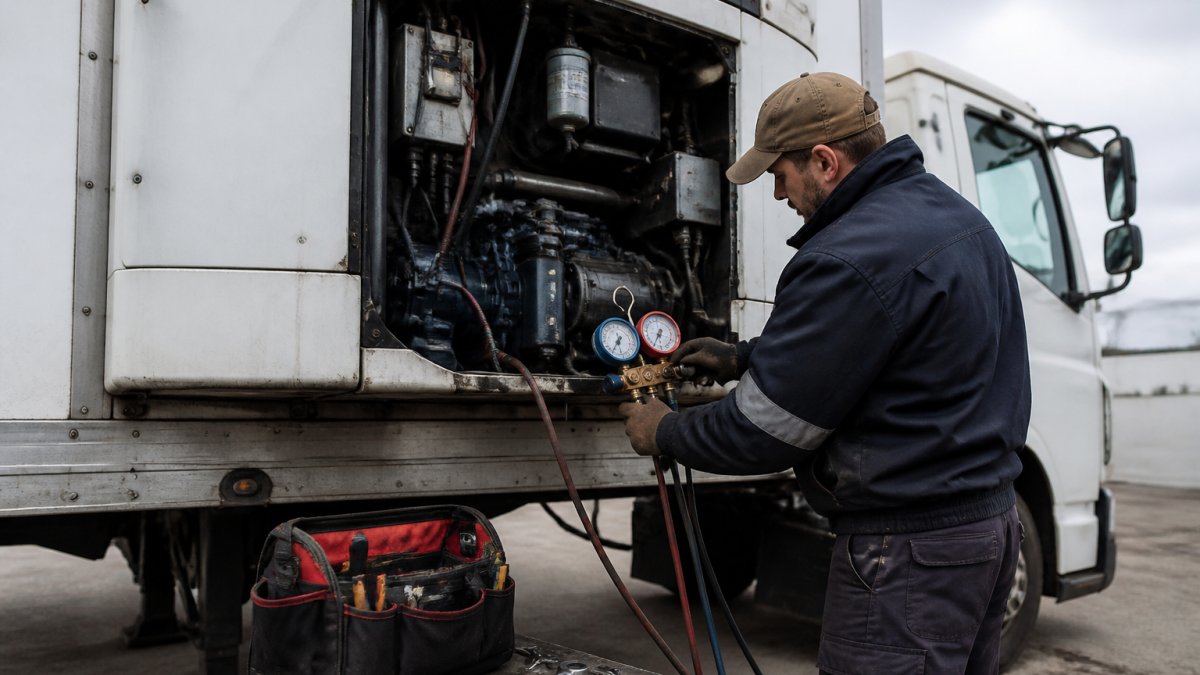
A safe operator sequence is: review alarms and temperature trends, check airflow and visible damage, note breaker trips and cycling frequency, then call a technician for pressure and amperage checks against the manufacturer's specifications. Do not open the refrigerant circuit or electrical panel.
Reefer Compressor Repair or Replacement: Making the Call
The repair-versus-replace decision on a transport refrigeration unit is not the same as on a building HVAC system. A reefer compressor failure carries cargo risk, downtime cost, and contamination questions that a residential unit never faces. Fleet managers who get this call right save both the part cost and the load.
Start with the damage type, not the age. A compressor that failed because of a failed capacitor, a bad start relay, or a minor leak is a repair candidate if the compressor itself still builds pressure and passes a current draw check against the manufacturer's specification.
Contamination is the factor most fleets miss. When a compressor fails internally, it can shed metal particles and acid into the refrigerant circuit. Replacing the compressor without flushing the lines, replacing the filter drier, and verifying oil cleanliness can lead to a repeat failure.
Downtime cost often decides the call. A trailer idle at a dock for two days can cost more in delayed shipments and spoiled product than the compressor itself.
Warranty and service history matter too. A unit still under a manufacturer's compressor warranty may have coverage that changes the math.
A practical rule many fleets use: if the compressor is the only failed component and the circuit is clean, repair. If the compressor has internal damage, the circuit is contaminated, or the unit has had two compressor failures in its service life, replace and fix the root cause.
If you are weighing the call on a specific unit, a mobile diagnostic can help you decide before committing to either path. Book Online to request transport refrigeration service from Platinum TRS in Tri-Cities, WA.
Protecting Cargo and Scheduling a Mobile Diagnostic Visit
Cargo protection starts the moment a warning sign appears. Move product to a working unit if you can. Keep the failed trailer doors closed. Document box temperatures so you can prove the cold chain held.
Then get a technician to the unit. Mobile service means the diagnosis can happen where the trailer sits, not only after a tow to a shop. Our team carries a large variety of parts on-site, so many repairs can be completed during the visit.
A failing reefer compressor does not have to become a lost load when problems are caught early. Catch the noise, the short cycling, and the breaker trips early, and you buy yourself time to decide.
Frequently Asked Questions
How can you tell if a reefer compressor is failing?
Watch for a cluster of symptoms rather than a single one. Grinding or rattling noises, warm air from the evaporator, frequent short cycling, oil residue around fittings, and breaker trips together point to a failing reefer compressor. A compressor that hums but will not start, or one that trips the circuit breaker repeatedly, is a strong signal. Confirm with gauge readings and amp draw before condemning the part.
Why is my transport refrigeration unit running but not cooling?
A running unit that will not cool usually has a refrigerant leak, a stuck expansion valve, a failed condenser fan, or a compressor that is not building pressure. Check airflow across the condenser coil first, then look for frost patterns and oil stains at joints. If suction and discharge pressures stay close together, the compressor itself is likely the problem and needs a professional diagnostic.
Can a reefer compressor be repaired, or does it need to be replaced?
Some failures are repairable, such as a failed start capacitor, a bad contactor, or a leaking service valve. Internal mechanical failure, burned windings, or a compressor that will not pump pressure means replacement. Age and hours also factor in: a unit near the end of its service life is usually better replaced than repaired. A technician can confirm with electrical and pressure tests.
What should I do if my reefer compressor stops working mid-route?
Protect the load first. Move product to a backup unit or cold storage if temperatures are climbing, and document the time and readings. Do not keep resetting a tripped breaker or running a compressor that is short cycling. Call for mobile repair so a technician can diagnose on site and confirm whether reefer compressor repair or replacement is needed before the cargo is at risk.
When a compressor starts grinding or a trailer will not hold temperature, every hour counts. Platinum Transport Refrigeration Services provides 24-hour emergency mobile repair, dealer-level expertise, and parts carried on-site so we can diagnose and fix your unit fast. Get started with Platinum Transport Refrigeration Services and keep your cold chain running. Call (509) 547-5262.
Comments