Signs Your Transport Refrigeration Needs Service
Last Updated: October 23, 2026
Quick Summary
The clearest signs your transport refrigeration needs service are temperature inconsistency, unusual noises, fluid leaks, and warning alarms. Catch any of these early and you're looking at a scheduled service call, but ignore them and you're looking at cargo loss and emergency downtime.
Compare supply-air and return-air readings to tell whether the problem is airflow, loading, or lost cooling capacity.
Record the fault code, time, setpoint, and both air readings so a technician can diagnose remotely.
Treat compressor, high-pressure, and low-refrigerant faults as stop-and-call alarms rather than monitor-and-continue.
Log the pull-down time during pre-trip, since a unit that reaches setpoint slowly will struggle all day.
Any symptom that repeats within two service intervals is a pattern, so escalate it to a full system inspection.
Table of Contents
Why Transport Refrigeration Service Matters for Your Fleet
A transport refrigeration unit that fails mid-route doesn't just cost a repair bill. It puts an entire load of perishable cargo at risk, triggers delivery delays, and can force a distributor to absorb a total loss on product that never reaches the shelf. At Platinum Transport Refrigeration Services, we see the same pattern repeatedly: units that limp along on reactive maintenance until a small fault becomes a roadside breakdown. The warning signs are almost always there first. This guide covers the symptoms that tell you a reefer unit needs service, how urgently to respond to each one, and what to check before you call anyone.
Signs Your Transport Refrigeration Needs Service: A Symptom-by-Symptom Checklist
The clearest signs your transport refrigeration needs service are temperature inconsistency, unusual noises, fluid leaks, and warning alarms. Catch any of these early and you're looking at a scheduled service call. Ignore them and you're looking at cargo loss and emergency downtime. Here's the checklist we walk fleet managers through.

Temperature Control Problems
Temperature fluctuation is the first warning sign most fleets notice. A unit that won't hold its setpoint, or that swings several degrees above and below it, is telling you something in the cooling circuit is struggling. Watch for inconsistent temperatures between the supply-air and return-air readings, and compare cargo temperature against the setpoint at delivery. A unit that reaches temperature slowly, or loses it during door openings, has lost cooling capacity somewhere.
Unusual Noises and Vibrations
New noises are rarely harmless. A compressor that clunks, a fan that squeals, or a vibration you can feel through the trailer floor usually points to a worn belt, a failing bearing, or a compressor short cycling under load. Left alone, these turn into seized components and a much larger repair.
Fluid Leaks and Component Wear
Check the ground under the unit after every pre-trip inspection. Oil leaks, refrigerant residue, or coolant pooling near the evaporator coil or condenser coil signal a seal, hose, or fitting problem. Worn belts and cracked door seals belong on the same list. A door seal that no longer closes tight lets warm air in all day and forces the unit to work harder than it should.
Reefer Unit Not Cooling: Causes and Immediate Steps
When a reefer unit isn't cooling, the cause is usually low refrigerant charge from a leak, a frosted or blocked evaporator coil, restricted airflow, or a compressor that can't build pressure. Here's what to do right now:
Confirm the setpoint and check supply-air and return-air temperatures on the controller.
Inspect the evaporator coil for frost or ice buildup and check that airflow isn't blocked by cargo stacked too close to the return grille.
Look for refrigerant residue or oil at fittings, and check the belt condition.
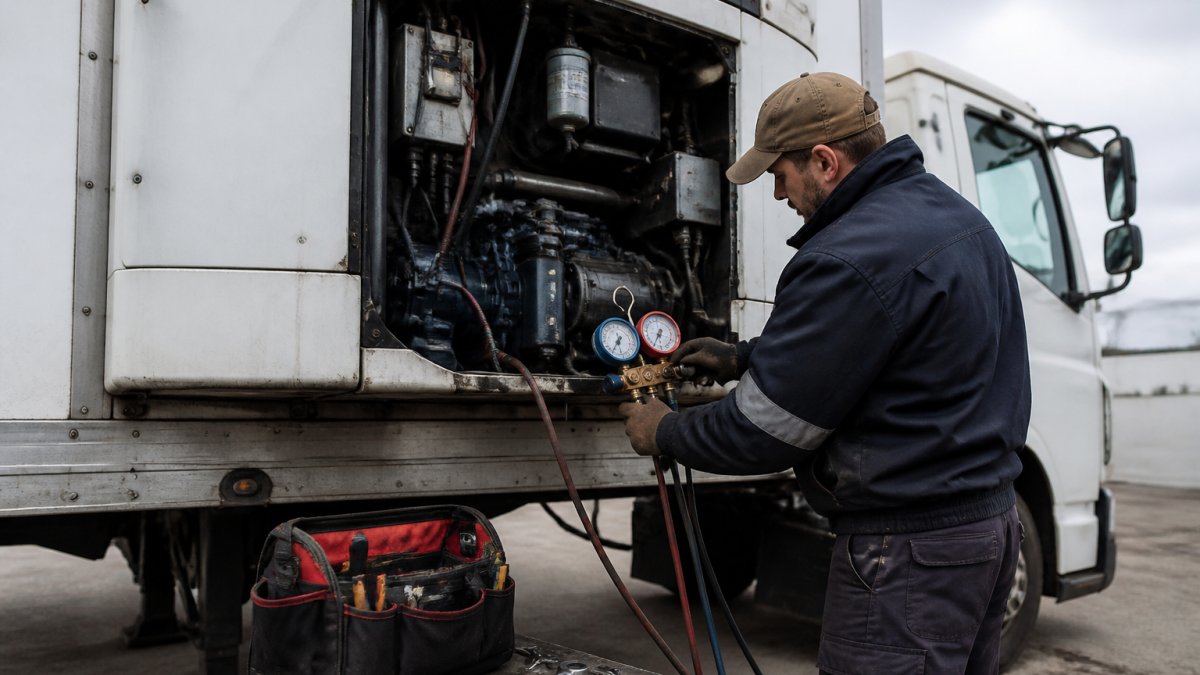
Note the refrigerant pressure readings if your controller displays them.
If the unit won't pull down temperature after these checks, stop the route and call for service before the cargo warms further.
Watch Out Running a unit that won't cool "just to finish the route" is the most expensive mistake we see. Perishable cargo can cross its safe temperature threshold before the driver reaches the next stop, and that load is a total loss, not a repair bill.
Reefer Unit Warning Lights and Alarms: How to Interpret Them
Warning lights and alarms are the unit telling you what it already knows, but the value is in reading them correctly. A controller typically shows three temperature numbers that drivers confuse: the setpoint (what you asked for), supply-air (what the unit is blowing into the box), and return-air (what is coming back from the cargo). Comparing them tells you where the problem lives.
Supply-air near setpoint, return-air far above it. The unit is cooling, but the box is not holding. Look for door-seal gaps, cargo stacked against the return grille, or a recent door opening. This is often an airflow or loading problem, not a refrigeration failure.
Supply-air and return-air both drifting above setpoint. The unit has lost capacity. Check for frost on the evaporator coil, a low refrigerant charge, or a compressor that is not building pressure.
Supply-air swinging widely around setpoint. Short cycling. Suspect a failing sensor, a refrigerant charge issue, or a compressor cycling on a protection fault.
Alarm patterns matter as much as the individual code. A single temperature alarm that clears after a door opening is different from a repeating alarm that returns every pull-down cycle. Record the fault code, the time it appeared, the setpoint, and the supply-air and return-air readings at that moment. That four-line note is what lets a technician diagnose remotely instead of repeating the same checks.
Treat these as stop-and-call alarms: a compressor or high-pressure fault (the system is protecting itself and should not be forced to run), a low-refrigerant or pressure fault, and any temperature alarm that persists after you confirm the doors are closed and the cargo is loaded correctly. A door-ajar or defrost-cycle notice is usually monitor-and-continue. When in doubt, document the reading and call, a two-minute phone description of the alarm pattern often separates a scheduled visit from a roadside emergency.
Transport Refrigeration Maintenance Checklist
A preventive maintenance schedule is cheaper than reactive repairs every time, but a reefer is not a walk-in cooler, and the checks that matter change with how the unit is operating. Use this checklist as your baseline, then adjust intervals to operating hours, unit age, and duty cycle.
Check | Frequency | What to Look For |
Setpoint and temperature accuracy | Every pre-trip | Drift from setpoint, slow pull-down, supply-air vs. return-air spread |
Refrigerant pressure and charge | Monthly | Low pressure, leak residue at fittings |
Evaporator and condenser coils | Monthly | Frost buildup, dirt, blocked airflow |
Belts and pulleys | Monthly | Cracks, glazing, looseness |
Door seals and gaskets | Weekly | Gaps, tears, poor closure |
Fluid levels and leaks | Every pre-trip | Oil, coolant, refrigerant residue |
Clogged floor drains | Monthly | Standing water, ice at the drain |
Full system inspection | Pre-season and per schedule | Compressor behavior, alarms, records |
Match the check to the operating condition. A pre-trip inspection is about readiness: confirm the setpoint, verify pull-down from ambient, and check belts, seals, and fluid levels before the unit is loaded. Pull-down is the hardest test a reefer faces, a unit that reaches setpoint slowly in pull-down will struggle all day, so log the time it takes. Continuous operation stresses the compressor and coils differently than start-stop operation, where frequent cycling wears belts, sensors, and contactors faster. If your fleet runs mixed duty cycles, set intervals per unit rather than per fleet.
Keep a written service log per unit. Record fault codes, operating hours, repairs, and the conditions when each symptom appeared. When a technician can see that the same low-pressure fault returned three times in two months, the diagnosis shifts from "recharge and go" to finding the leak. That history is also what makes the repair-versus-replace call clear when age and repair costs start stacking up.
Pro Tip A simple rule that works for most fleets: any symptom that repeats within two service intervals is a pattern, not an incident. Escalate it to a full system inspection rather than another component swap.
When to Call for Mobile Reefer Repair
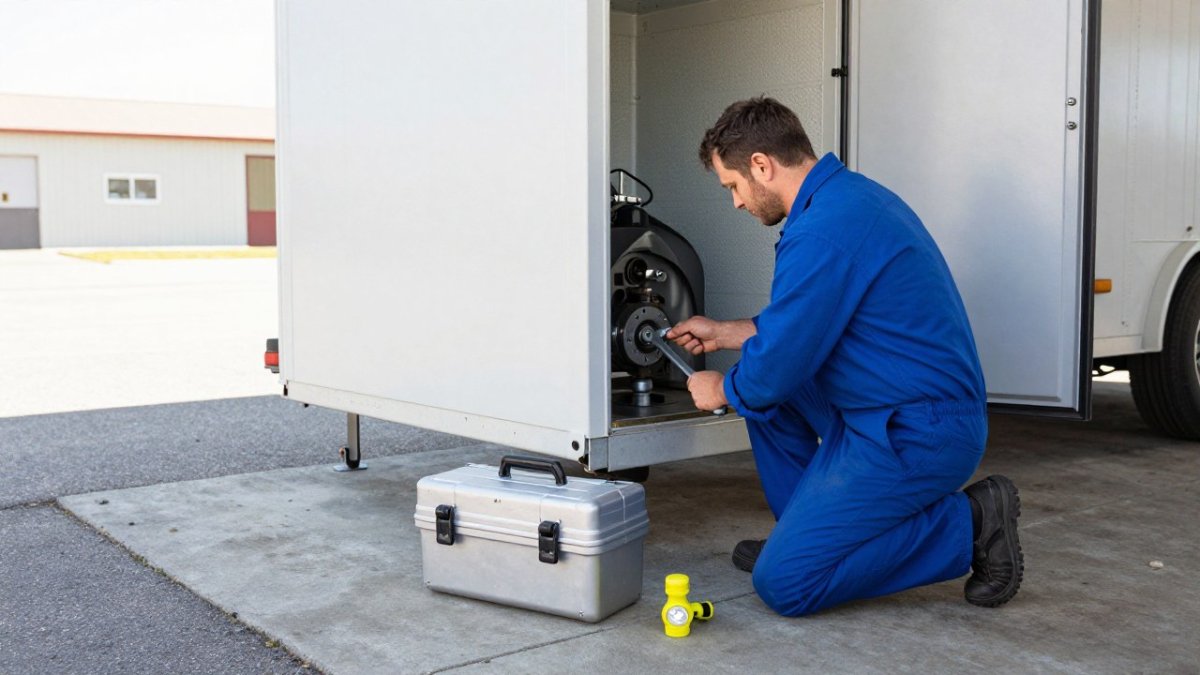
Call for mobile reefer repair when the unit won't hold temperature, when an alarm won't clear, when you see a refrigerant or oil leak, or when a noise or vibration gets worse under load. Those are the cases where waiting costs more than calling. A unit that's merely due for scheduled maintenance can wait for a planned visit. A unit that's losing cooling capacity with cargo on board cannot.
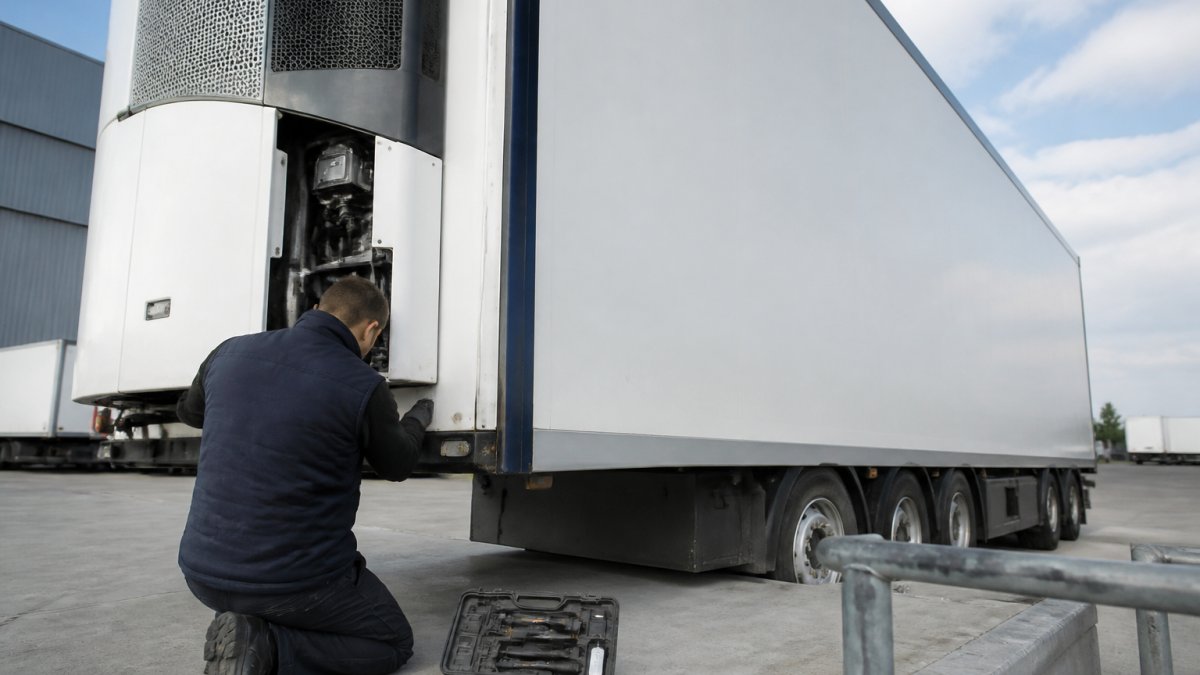
That's the gap our 24-hour emergency service is built for. We run 100% mobile, so we come to your yard, dock, or roadside location with dealer-level expertise and a large variety of parts carried on-site. That means fewer "we'll have to order it" delays and more units back in service the same day.
Key Takeaway Match your response to the symptom. Temperature loss, leaks, and active alarms mean call now. Noises, worn belts, and dirty coils mean schedule service before the next long haul.
Conclusion
Every reefer failure starts as a warning sign someone decided to live with. The fleets that avoid downtime are the ones that treat temperature drift, new noises, and small leaks as service triggers, not inconveniences. If your units are showing any of the symptoms above, don't wait for a breakdown to force the issue. Platinum Transport Refrigeration Services provides 24-hour emergency mobile repair, dealer-level diagnostics, and preventive maintenance that keeps your fleet running and your cargo protected. Call (509) 547-5262 and get your reefer unit back to peak performance.
Frequently Asked Questions
What are the most common signs that transport refrigeration needs service?
Watch for inconsistent temperatures, poor cooling performance, unusual noises, fluid leaks, and frequent breakdowns. Warning lights or alarms on the reefer unit control panel also signal the need for service. Catching these early prevents cargo spoilage and costly downtime.
Why is my reefer unit not cooling properly?
A reefer unit not cooling often points to low refrigerant, a faulty compressor, or blocked airflow from frost buildup on the evaporator coil. Check for ice on coils and ensure door seals are tight. If the set temperature isn't reached, schedule a diagnostic with a mobile reefer repair technician.
How often should a transport refrigeration unit be serviced?
Follow the manufacturer's recommended intervals, typically every 1,000 to 1,500 operating hours or at least twice a year. A pre-trip inspection before long hauls and a pre-season check before peak demand help catch issues early. Keep a maintenance log to track service history.
Can a refrigerated truck unit be repaired on the road?
Yes, many common issues like refrigerant leaks, belt replacements, and sensor faults can be fixed on-site by a mobile reefer repair service. Technicians carry parts and tools to handle most repairs without towing the unit to a shop, minimizing downtime and delivery delays.
Comments