The Fleet Manager's Guide to Reefer Unit Preventative Maintenance
Last Updated: October 28, 2026
Quick Summary
Reefer maintenance is the scheduled inspection, cleaning, and replacement of a transport refrigeration unit's mechanical, electrical, and refrigeration components so it holds temperature reliably. A working checklist tiers tasks by calendar, hour meter, and duty cycle, starting with a 10 to 15 minute driver pre-trip walk-around.
Drivers should run a pre-trip walk-around that takes 10 to 15 minutes before the wheels roll.
Around 500 hours, service engine oil, oil filter, and check belt tension and condition.
Around 1,000 hours, replace the fuel filter and clean the condenser and evaporator.
High ambient temperature, frequent door openings, and dusty environments shorten service intervals.
Drivers may reset a tripped breaker once but refrigerant work goes to certified technicians.
Table of Contents
Building a Reefer Unit Maintenance Schedule by Hours and Duty Cycle
The Components That Fail: Belts, Hoses, Battery, and Electrical Connections
Refrigerant Leak Detection, Defrost, and Temperature-Control Verification
Using a Reefer Maintenance Log Template to Track Every Service
Scheduling Mobile Reefer Service With Platinum Transport Refrigeration Services
Why Reefer Maintenance Protects the Cold Chain
A reefer unit that fails quietly is worse than one that fails loudly. The loud failure gets fixed; the quiet one lets temperature-sensitive freight drift out of range for hours before anyone notices, and by then the load is a loss.
Reefer maintenance is the scheduled inspection, cleaning, and replacement of the mechanical, electrical, and refrigeration components on a transport refrigeration unit to keep it holding temperature reliably.
The Reefer Pre-Trip Inspection Checklist Drivers Should Run
A pre-trip walk-around catches most developing failures before the wheels roll. It takes 10 to 15 minutes and belongs to the driver, not the shop.

Exterior and Mounting Walk-Around
Check unit doors, latches, and door seals for gaps or tears
Inspect mounting hardware and bolts for looseness
Look for refrigerant or oil leaks under the unit
Clear debris from the condenser coil and fan blades
Confirm the defrost drain hose is clear and routed correctly
Engine, Fluid, and Filter Checks
Check engine oil level and condition; note any milky appearance
Verify coolant level and coolant protection rating
Inspect the fuel level and drain water from the fuel filter
Check the air filter for dust loading
Look at belts for cracks, glazing, or slack
Refrigeration and Temperature Verification
Start the unit and confirm the setpoint matches the load
Watch the temperature reading stabilize
Verify the defrost cycle initiates and terminates
Listen for abnormal compressor or fan noise
Confirm the flapper valve opens and closes freely
The Commercial Vehicle Safety Alliance inspection standards offer a useful reference for how thorough a proper pre-trip walk-around should be.
Building a Reefer Unit Maintenance Schedule by Hours and Duty Cycle
A reefer unit maintenance schedule should tier tasks by operating hours, calendar time, and duty cycle, not a single mileage figure. A unit running produce in summer heat works harder than one on frozen freight in mild weather. The practical fix is a three-layer schedule: a calendar layer for time-based degradation, an hour-meter layer for wear-based service, and a duty-cycle modifier that pulls intervals forward under hard use.
Layer 1: Calendar-Based Tasks
Interval | Owner | Tasks |
Every trip | Driver | Pre-trip walk-around, setpoint and temperature reading check |
Weekly | Driver or lead | Belt and hose visual, battery terminal inspection, condenser rinse, door seal check |
Monthly | Technician | Oil and filter review, refrigerant pressure check, electrical connection torque check |
Quarterly | Technician | Full system inspection, defrost cycle verification, mounting hardware torque check |
Twice yearly | Technician | Coolant protection rating test, seasonal changeover service |
Layer 2: Hour-Meter-Based Tasks
Around 500 hours: engine oil and oil filter, fuel filter water drain, air filter inspection, belt tension and condition check.
Around 1,000 hours: fuel filter replacement, coolant level and protection check, battery load test, condenser and evaporator cleaning, refrigerant pressure and superheat check.
Around 2,500 hours: full refrigerant system inspection, compressor drive check, electrical harness inspection, defrost system service, mounting hardware and isolator inspection.
Layer 3: Duty-Cycle Modifier
High ambient temperature: summer produce and beverage hauling in sustained heat loads the condenser and compressor harder; shorten condenser cleaning and refrigerant check intervals.
Frequent door openings: multi-stop delivery and foodservice routes pull in warm, humid air, which loads the evaporator and defrost system; shorten defrost and drain inspections.
Stop-and-go operation: urban delivery cycles stress the battery, starter, and belts; shorten electrical and belt inspections.
Dusty or dirty environments: construction, agricultural, and gravel-yard operation loads the air filter and condenser; shorten air filter and coil cleaning intervals.
Long idle periods: seasonal or standby units suffer from battery discharge, seal drying, and refrigerant migration; add a startup inspection before returning a unit to service.
Seasonal Changeover Service
Before summer, verify coolant protection rating, clean the condenser, and confirm the refrigerant charge holds under load. Before winter, check battery health, confirm the defrost system works in cold, wet conditions, and inspect door seals for cold-weather hardening. Seasonal service is the natural point to reconcile the calendar layer against the hour-meter layer and reset next-due dates.
Pro Tip Build the schedule around the unit's own hour meter and the manufacturer's published interval table, then apply the duty-cycle modifier on top. A schedule that ignores severe duty will always be chasing failures instead of preventing them.
The Components That Fail: Belts, Hoses, Battery, and Electrical Connections
Belts crack and glaze before they snap. Hoses soften, bulge, or weep at the clamps. Battery health declines quietly, showing up as a no-start on a cold morning. Wiring harnesses chafe against brackets, and corroded connections cause intermittent faults that are hard to trace. Inspect, clean, and tighten these items on every monthly service, and replace anything showing wear rather than waiting for failure.
Refrigerant Leak Detection, Defrost, and Temperature-Control Verification
For food-safety context, the FDA Food Code guidance on cold holding sets the temperature-control expectations that your cold chain has to meet.
Reefer Unit Troubleshooting and When to Escalate
Warning sign | Likely cause | Driver action | Escalate when |
Unit will not start | Weak or dead battery, tripped breaker, fuel starvation | Check fuel level, inspect battery terminals, reset tripped breaker once | Unit still will not start after one reset, or breaker trips again |
Temperature reading will not hold setpoint | Low refrigerant charge, dirty condenser, failed fan, door seal leak | Confirm doors and seals, clear condenser debris, verify setpoint | Reading drifts more than a few degrees from setpoint after 30 minutes |
Compressor or fan noise | Loose mounting, bearing wear, fan blade obstruction | Shut unit down, inspect for visible obstruction from a safe distance | Any grinding, squealing, or metal-on-metal sound |
Frost pattern on coil or lines | Refrigerant restriction, low charge, failed defrost | Note the frost location and photograph it | Any frost pattern that persists after a full defrost cycle |
Oil residue at fittings | Refrigerant leak | Note the location and photograph it | Any confirmed oil residue at a fitting or joint |
Defrost cycle does not complete | Failed timer, heater, or termination sensor | Verify drain hose is clear and flapper valve moves freely | Defrost does not terminate, or ice builds on the evaporator |
Water in the trailer | Plugged defrost drain hose, stuck flapper valve | Clear visible debris from the drain hose | Hose cannot be cleared or flapper valve does not seal |
Repeated low-voltage or no-start faults | Chafed harness, corroded connection, failing battery | Inspect battery terminals and visible wiring | Any fault that returns after cleaning and tightening connections |
Stop-Operation Criteria
The unit cannot hold the load's required temperature range and the cargo is at risk.
There is a visible refrigerant leak, oil residue at a fitting, or a strong refrigerant odor.
The compressor, fan, or drive belt is making grinding or metal-on-metal noise.
Smoke, burning insulation smell, or a hot electrical component is present.
A breaker trips repeatedly after a single reset.
Safety Procedures and Technician Precautions
Lockout and tagout: shut the unit down and isolate power before opening panels or reaching near fans and belts.
Hot surfaces: the engine, exhaust, and compressor run hot; allow cool-down before contact.
Moving fans and belts: treat the condenser and evaporator fans as live until power is locked out.
Battery hazards: batteries vent hydrogen and carry high short-circuit current; remove jewelry and use insulated tools.
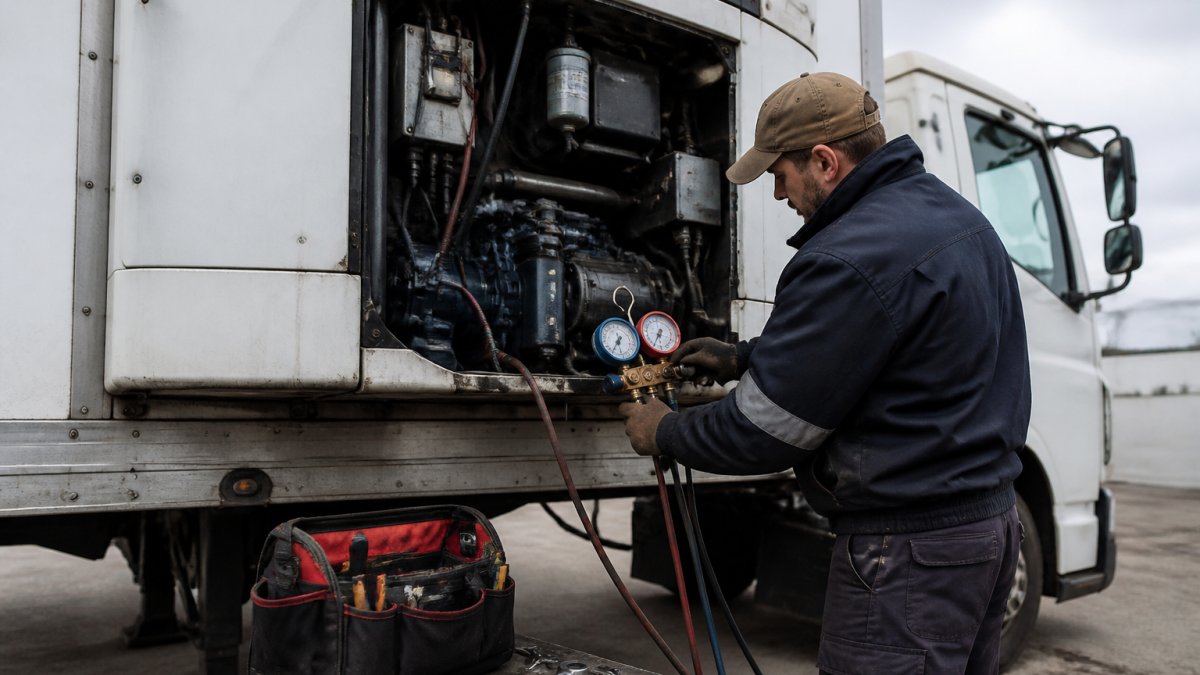
Refrigerant handling: refrigerant can cause frostbite and displaces oxygen in enclosed spaces; only certified personnel should recover, charge, or open the refrigerant circuit.
What Drivers Can Safely Do
Drivers can safely check fuel level, clear condenser debris, tighten a loose latch, reset a tripped breaker once, and document temperature readings and warning signs with photos. Anything involving refrigerant, the compressor, the electrical harness, or the defrost heater goes to a qualified technician. For more maintenance tips and troubleshooting insights, explore the Platinum TRS blog before deciding to escalate.
Using a Reefer Maintenance Log Template to Track Every Service
Date and unit ID
Operating hours at service
Tasks performed (inspection, replacement, repair)
Parts replaced and part numbers
Technician name and findings
Next service due by hours and by date
Scheduling Mobile Reefer Service With Platinum Transport Refrigeration Services
Platinum Transport Refrigeration Services provides 24-hour emergency mobile repair and maintenance for commercial transport refrigeration units, with dealer-level expertise and a large variety of parts carried on-site. Our 100% mobile service. book transport refrigeration service
Frequently Asked Questions
What should be included in a reefer unit preventative maintenance checklist?
A solid reefer maintenance checklist covers engine oil level and condition, oil and fuel filter condition, coolant level and protection rating, air filter, belts and hoses, battery health and wiring connections, mounting hardware, condenser and evaporator cleanliness, refrigerant pressure and level, defrost cycle operation, and door seals and latches. Pair each item with a pass/fail note and the date so you can spot trends. Temperature setpoint and actual reading checks belong on every inspection, since food-safety verification depends on them.
How often should a reefer unit be serviced?
Most fleets run a tiered reefer unit maintenance schedule: daily pre-trip checks by drivers, weekly or monthly inspections by a shop lead, and full preventive maintenance at set operating-hour intervals, typically every 1,000 to 1,500 hours depending on the manufacturer. Calendar time matters too, because a unit that sits idle still degrades belts, seals, and batteries. High-duty-cycle units on multi-stop food routes need shorter intervals than seasonal agricultural units.
What should drivers check on a reefer unit before a trip?
Drivers should run a quick walk-around: inspect the unit doors, seals, and latches, look for debris in the condenser coil, check the fuel level, verify the temperature setpoint matches the load, and confirm the unit starts and holds temperature. A glance at belts and hoses catches obvious wear. Any chafed wiring, unusual noise, or temperature that will not pull down should be reported before the truck leaves the yard, not at the first stop.
What are common signs that a reefer unit needs maintenance?
Watch for temperature readings that drift from the setpoint, longer pull-down times, frequent defrost cycles, unusual compressor or fan noise, coolant or oil spots under the unit, a battery that struggles to crank, and belts that squeal or look glazed. A clogged defrost drain hose or a stuck flapper valve shows up as ice buildup or water in the trailer. Catching these early is what keeps a reefer unit troubleshooting call from becoming an emergency.
When should a reefer unit be serviced by a qualified technician?
Call a technician when you see refrigerant pressure outside spec, a leak you cannot trace, repeated temperature excursions, electrical faults in the wiring harness, or any repair that involves the compressor or refrigerant circuit. Refrigerant handling is regulated under Section 608 of the Clean Air Act, so leak detection and recharge should go to a certified tech. If a unit fails a pre-trip inspection twice, escalate rather than send it out.
What maintenance records should reefer operators keep?
Keep a reefer maintenance log template that records the date, unit number, operating hours, items inspected, parts replaced, technician name, and temperature readings before and after service. Retain pre-trip inspection sheets and any refrigerant service records. These logs support warranty claims, prove due diligence for food-safety audits, and reveal which units are costing you the most in downtime. A simple spreadsheet works; consistency matters more than the format.
Reactive maintenance feels fine until the first failed load. If you want to move from firefighting to a scheduled program, Platinum Transport Refrigeration Services can help with 24-hour emergency mobile repair, dealer-level diagnostics, and parts carried on-site so your units get back to holding temperature fast. Get started with Platinum Transport Refrigeration Services and keep your cold chain running without the surprises.
Comments